An excellent 2LP set containing everything Joe Turner recorded for National between February 1945 and December 1947. The gatefold sleeve has an excellent essay on Joe's life prior to his signing for National as well as a review of the sides on this collection. Warning - this is a larger than usual download as both discs plus artwork are contained in the Zip file. Be prepared for 186 rockin' megabytes.
Joe Turner's long career took him from the clubs of prohibition Kansas City to the Spirituals To Swing concert at Carnegie Hall in 1938 and onwards through the boogie woogie craze, the rise of R&B, and almost unbelievably when in his mid 40s to rock and roll. And when that turned to crap he simply went back to jazz and blues and kept ballin' and squallin' into the 1980s. Through it all he sounded much the same and quite a few of the songs were the same too. All that changed was the backing, and when he fetched up at Atlantic Records in 1951 he was given the best recording facilities and the best backing groups (usually produced and arranged by Jesse Stone), all of which brought him commercial success and a string of R&B hits.
The National sides, while not having the impact that his Atlantic sides would bring, were mostly very good indeed. The January 1946 sides featuring groups led by Wild Bill Moore are raucous but not as focused as the Atlantic material. If you're familiar with the Atlantic stuff and / or Joe's earlier oeuvre, quite a few of these tracks will sound familiar as earlier hits such as "Cherry Red, " "Careless Love" and "It's A Lowdown Dirty Shame" resurface, sometimes under new titles. And of course quite a few of Joe's songs consisted of familiar blues verses mixed into various concoctions. You know what you're going to get - and it's good. All killer, no filler!
Above: dapper Joe in 1944
Above: Joe's longtime collaborator Pete Johnson
Note - the Fax On The Trax section has the song titles as they were on the original releases on 78 rpm singles. Some titles on the LP track list are inaccurate. Joe Turner was never billed as "Big Joe Turner" on these releases. The actual artist attributions are also detailed below.
Fax On The Trax
Side 1, Tracks 1-5: S.K. Blues Part 1; S.K. Blues Part 2; Johnson And Turner Blues; Johnson And Turner Blues -master; Watch That Jive - recorded in NYC, February 2nd, 1945. Personnel: Joe Turner (vocals) with - Frank Newton (trumpet); Don Byas (tenor sax); Pete Johnson (piano); Leonard Ware (guitar); Al Hall (bass); Doc West (drums).
The second take of "Johnson And Turner Blues," labelled "master" on this collection is the released take (National 9011).
S.K Blues Part I / S.K. Blues Part II - Joe Turner with Pete Johnson's All Stars, released on National 9010, February, 1945.
Watch That Jive / Johnson & Turner Blues - Joe Turner with Pete Johnson's All Stars, released on National 9011, April, 1945
Side 1, Tracks 6 and 7: Howlin' Winds; Low Down Dog - recorded in Chicago, May 10th, 1945. Joe Turner with Dallas Bartley and his Small Town Boys. Personnel: Joe Turner (vocals) with - Bill Martin (trumpet); Flaps Dungee (alto sax); Josh Jackson (tenor sax); Pete Johnson (piano); unknown (guitar); Dallas Bartley (bass); unknown (drums).
Howlin' Winds; Low Down Dog - not issued on singles.
Side 2, Tracks 1-5: I Got My Discharge Papers; Miss Brown Blues; I'm Still In The Dark; My Gal's A Jockey; I Got Love For Sale - recorded in Los Angeles, January 23rd, 1946. Personnel: Joe Turner (vocals) with - Warren Brocken (trumpet); Lloyd Harrison and Wild Bill Moore (tenor saxes); Al Williams (piano); Teddy Bunn (guitar); John "Shifty" Henry (bass); Alray Kidd (drums).
My Gal's A Jockey / I Got Love For Sale - Joe Turner with Bill Moore's Lucky Seven Band, released on National 4002, June 1946.
Rest of this session not released on singles.
Side 2, Tracks 6-8: Sunday Morning Blues; Mad Blues; Playboy Blues - recorded in Los Angeles, January 30th, 1946. Personnel - Joe Turner (vocals) with - Russell Jacquet (trumpet); Wild Bill Moore and Lou Simon (tenor saxes); Camille Howard (piano); Teddy Bunn (guitar); John "Shifty" Henry (bass); Walter Murden (drums).
Mad Blues / Sunday Morning Blues - Joe Turner with Bill Moore's Lucky Seven, released on National 4009, October 1946.
"Playboy Blues" was re-titled "It's A Lowdown Dirty Shame" and released on National 9099 b/w "Nobody In Mind" in January 1950.
Side 3, tracks 1-8 recorded in Chicago, tracks 1-4 (I'm Still In The Dark; Miss Brown Blues; Sally Zu-Zazz; Rock Of Gibraltar) recorded on October 11th 1946. Tracks 5-8 (Milk And Butter Blues; That's When It Really Hurts; I'm Sharp When I Hit The Coast; New Wee Baby Blues) recorded on October 12th 1946. Personnel on tracks 1-4: Joe Turner (vocals) with - Sonny Cohn (trumpet); Porter Kilbert or possibly Tab Smith (alto sax); probably Leon Washington (tenor sax); Albert Ammons (piano); Ike Perkins (guitar); Mickey Simms (bass); Theodore "Red" Saunders (drums).
Similar personnel on Side 3, tracks 5-8, but Albert Ammons drops out, replaced by Rudy Martin (probably).
Miss Brown Blues / I'm Sharp When I Hit The Coast - Joe Turner And His Boogie Woogie Boys, released on National 4011, January 1947.
Rock O' Gibralter / Sally Zu-Zazz - Joe Turner And His Boogie Woogie Boys, released on National 4016, May 1947.
That's What Really Hurts / Whistle Stop Blues - Joe Turner and his Boogie-Woogie Boys, released on National 4017, April 1948.
Above: Billboard, April 1948
Hollywood Bed / New Oo-Wee Baby Blues - Joe Turner, released on National 9100 in February (?) 1950.
Still In The Dark / My Gal's A Jockey - Joe Turner, released on National 9106 in March 1950.
Side 4, Tracks 1-4(Nobody In Mind; Lucille Lucille; Rocks In My Bed; Careless Love), recorded in Chicago on November 29th, 1947. Personnel: Joe Turner (vocals) with - Charles Gray (trumpet); Riley Hampton (alto sax); Otis Finch (tenor sax); Ellsworth Liggett (piano); Ike Perkins (guitar); Robert Moore (bass); James Adams (drums).
Side 4, Tracks 5-8 (Last Goodbye Blues; Whistle Stop Blues; Hollywood Bed; Howlin' Winds) recorded in Chicago on December 9th, 1947. Personnel as November 29th session.
Lucille Lucille, Careless Love, and Last Goodbye Blues were not released on singles.
That's What Really Hurts / Whistle Stop Blues - Joe Turner and his Boogie-Woogie Boys, released on National 4017, April 1948.
It's A Lowdown Dirty Shame / Nobody In Mind - Joe Turner, released on National 9099, in January 1950.
Hollywood Bed / New Oo-Wee Baby Blues - Joe Turner, released on National 9100 in February (?) 1950.
Rocks In My Bed / Howlin' Winds - Joe Turner, released on National 9144 in April 1951.
The last Joe Turner release on National. By the time this ad ran he had signed to Atlantic
Elsewhere On The Blog
Joe Turner - Jumpin' Tonight is a Pathe Marconi collection of sides recorded for Aladdin in July and November 1947 and for Imperial in April 1950. Originally posted in October 2009.
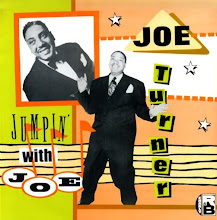
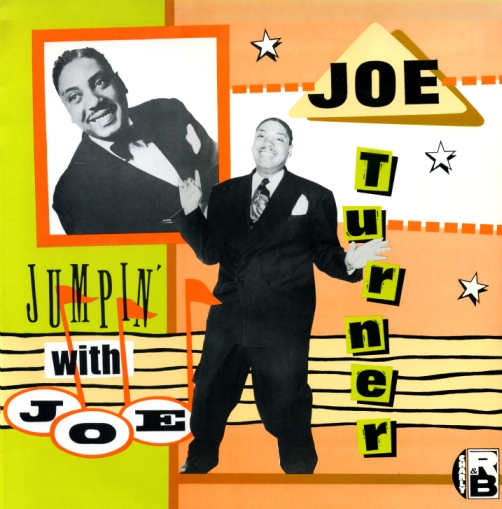
Joe Turner - Jumpin' With Joe is a Charly collection of sides recorded for Atlantic from 1951 to 1958. Originally posted in October 2009.
Side 1:
01. Russel St Hussel
02. Porter's Ball
03. Shuffling Boogie
04. Russell Street Hustle
05. King Porter Special
06. Bar Fly
07. Come On In
08. Battle Ax
Side 2:
01. Charlie The Boogie Man
02. Bumps Boogie
03. Hey Little Brownie
04. Should Have Rationed Myself
05. Chidtlin' Ball
06. Don't Let Fletcher Getcha
07. Special Request
08. I've Tried
A re-up (with new cover and label scans) for a fine set of swingin' jump blues. Unusually, this compilation features sides by two completely different artists using the same moniker - "King Porter."
Side 1 features the Detroit based King Porter who was trumpeter James Poe. The two earliest sides, "Russel St. Hussel" and "Porter's Ball" (released in June / July 1948) are rumoured to have Paul Williams present on alto sax, but his name isn't among the musicians named on the label of the release.
Wild Bill Moore is very much present on the remaining Detroit sides. "King Porter Special" / "Shuffling Boogie" (King 4267 - released in February / March 1949) and "Russel St. Hustle" / "Bar Fly" (King 4295 - probably released June / July 1949) were possibly recorded for the local JVB label but sold on to King for release. The Detroit group recorded for King in Cincinnati on June 7th 1949, with one single, "Battle Ax" / "Come On In" being released on King 4333 in January 1950.
Meanwhile in California another King Porter band, led by trumpeter Vernon, "Jake" Porter (who would found the Combo label in the early '50s) was recording for Imperial and this outfit is featured on Side 2. Among the musicians were Marshall Royal, Gene Porter, Gene Philllips, and Bumps Myers. They were part of a group of musicians who recorded for several record companies under various identities, i.e as Gene Phillips and His Rhythm Aces for Modern, and on Imperial as Lloyd Glenn and His Joymakers or King Porter.
The final two tracks in the compilation are a bit of a puzzle. "I've Tried" / "Special Request" was released on West Coast label 4 Star in October 1952, but it's uncertain which of the two combos recorded these sides, or perhaps it was a third outfit using the King Porter name.
"Swingin' For Pappy," "Bubbles," and "Harlem On Parade" were recorded in Detroit on the 21st November 1947. Personnel: Phil Guilbeau (trumpet); Wild Bill Moore (tenor sax); Paul Williams (baritone, alto sax); Floyd Taylor (piano); Herman Hopkins (bass); Reetham Mallett (drums).
"We're Gonna Rock," "Bongo Bounce," "South Parkway Hop," "Top And Bottom," and "Rocking With Leroy" were recorded in Detroit on the 18th December 1947. Personnel: Phil Guilbeau (trumpet); Wild Bill Moore (tenor sax); Paul Williams (baritone, alto sax); T.J. Fowler (piano); Herman Hopkins (bass); Reetham Mallett (drums).
These 8 sides were originally issued as follows:
Swingin' For Pappy / Bubbles, released on Savoy 662 in January 1948. "Bill Moore And His Band."
We're Gonna Rock / Harlem On Parade released on Savoy 666 in July 1948. "Bill Moore featuring Paul Williams."
South Parkway Hop / Bongo Bounce released on Savoy 690 in March 1949. "Wild Bill Moore Sextette."
Top And Bottom / Rocking With Leroy released on Savoy 717 in November 1949. "Wild Bill Moore."
Wild Bill Moore goes into the annals of rock and roll for his 1947 Savoy recording of "We're Gonna Rock," featuring honkin' and squealin' sax from the man himself, accompanied by a moronic band chant of "we're gonna rock, we're gonna roll," all underpinned by boogie piano from T.J. Fowler and mo' riffin' sax from Paul Williams.
Released in July 1948 this proto-rocker made it into the Billboard top twenty race records chart briefly, thereby constituting Wild Bill's only entry into the national charts, although his previous single "Bubbles" had good sales in certain locations, e.g. number two in The Cash Box's New Orleans chart in March / April 1948 and number one in Chicago. Savoy also had Paul Williams' "35-30" riding high in the Cash Box New Orleans and Chicago charts at the same time.
The Cash Box July 17th 1948
This homemade compilation has all of Wild Bill's single releases on Savoy, which amounted to only four discs, recorded at two sessions. The Bill Moore story is rather sketchy in places. Wikipedia claims he was born in Detroit but every other source I've looked at gives his place of birth as Houston, Texas, on June 13, 1918. He did spend prolonged periods working in the Detroit area as well as in Los Angeles. His first recording date was in New York in 1944 as a backing musician on a Christine Chatman session for Decca.
In 1945, 1946 and most of 1947 he was involved in a series of recording sessions in Los Angeles. In August 1945 he was part of the Bill Doggett Octet which backed Helen Humes on Philo / Aladdin, a session which produced the smash hit "Be-Baba-Leba." In September he was on a Slim Gaillard session for Queen and in December 1945 he played on an Apollo recording session for blues shouter Duke Henderson. Three and a half years later two sides from this session were released in March 1949 under Wild Bill's name - "Homecoming Blues" (a Duke Henderson vocal) and the instrumental "Boulevard Boogie." The vocal was dated - referring to a return from World War Two - and the instrumental sounded like an arrangement from 1945 rather than 1949.
Wild Bill continued to record in LA through 1946, starting with a Joe Turner session for National on January 23rd in which the backing group was billed as "Bill Moore's Lucky Seven Band." A week later Bill was once more backing Joe Turner for National as part of a group billed as "Joe Turner's All Stars" which also included Russell Jacquet and Camille Howard. In February he was part of a Jack McVea led group at a session for Black & White and later in the same year he backed Helen Humes in a session for the same label.
On July 6th 1947 Wild Bill Moore took part in the "Hollywood Jazz Concert" at the Elks Auditorium on South Central Avenue. This event was organised by promoter Jack Williams as a concert / dance featuring top beboppers Dexter Gordon, Wardell Gray, Sonny Criss and Howard McGhee. Also on the bill was a band featuring Bill Moore and fellow tenor sax man Gene Montgomery. The entire concert was recorded by Ralph Bass with a view to persuading Herman Lubinsky to release extracts on 78 rpm discs on the Savoy label. Bass was particularly impressed by the tenor sax battles between Gordon and Gray and having failed to secure releases on Savoy, released extracts of what were in fact extended jam sessions on his own Bop label.
Along with the Dexter Gordon / Wardell Gray sides, he released extracts from the Wild Bill Moore / Gene Montgomery "Perdido" jam as "Wild Bill Parts 1 & 2" on Bop 103, a disc which was the first to be released under Bill's name. Savoy eventually acquired the Bass masters and released the Wardell Gray / Dexter Gordon tracks in various formats, culminating in the 2LP set "The Hunt." The Wild Bill Moore / Gene Montgomery jam on "What Is This Thing Called Love" eventually emerged on another Savoy 2LP set, "Black California Vol. 2."
Finally Savoy Jazz released a 3CD set in 2004, "Bopland" which featured the complete Elks Auditorium concert including the full 20 minutes of Wild Bill Moore and Gene Montgomery's "Perdido."
Towards the end of 1947 Wild Bill was in Detroit where he recorded the tracks on our featured compilation for Savoy on November 21st and December 18th. At around the same time (November 20th and December 20th) he was recording tracks with Paul Williams which were released as Paul Williams Sextet records. On December 19th he took part in a King Porter (James A. Pope) recording session for the King label.
Bill was involved in further Paul Williams Savoy sessions in Detroit during March 1948, playing on "Waxie Maxie," "The Twister," and "Spider Sent Me." The next Paul Williams session (at which "The Hucklebuck" was recorded) was in December 1948, by which time Bill had left the band.
Things get a bit vague now regarding Bill's session dates for much of 1948-49. We have already referred to the March 1949 release of two Apollo sides recorded by Bill in 1945 with Duke Henderson. We know that Bill recorded four sides for Modern in LA, possibly some time in 1948. One of the sides "Rock And Roll" was released in June 1949 (Modern 674) and a follow up, "Dubble Bubble" (Modern 687) was released in July 1949.
A Wild Bill disc "Football Boogie" / "Blue Journey" was released on Sensation in November 1949. Discographies usually list this as being recorded sometime around 1954, but obviously with the disc being reviewed in the 19th November 1949 issue of Billboard, this is impossible. The recording session may have been sometime in 1949 and possibly in Detroit.
An interesting point in the review is that "Football Boogie" is described as having "suspiciously loud crowd noises" - obviously inferring that crowd noise had been dubbed in to give the impression that it was recorded live. The version of "Football Boogie" on the Blue Moon CD "Wild Bill Moore The Complete Recordings Volume 2 1948-1955" does not feature any crowd noises. It does have lots of crackling and hissing.
Bill took part in another King Porter session for King on June 7th 1949 in Cincinnati, with "Come On In" / "Battle Axe" being released in January 1950.
Another release during this period was "Steam Heat" / "Wanda Lee Blues" credited to Wild Bill Moore And His Wild Cats on the obscure Alben label. These sides are thought to have been recorded in Detroit in 1948 or 1949.
Bill's recording career becomes easier to trace from late 1949 onwards with a session for Regal in New York on October 26th of that year. On March 3rd 1950 he recorded four sides for King in New York, the resultant two discs being released in May and August 1950 - "Rock Bottom" / "Neck Bones And Collard Greens" and "Hey-Spo-Dee-O-Dee" / "Balancing With Bill." These are four tremendous sides which I first came across on the old Westside CD "Groove Station" - a comp of King and Federal sax instros including Al Sears, Preston Love and Jesse Powell as well as Wild Bill.
There was one more session for King in Detroit in August 1950 which was followed by a hiatus of around 5 years when Bill recorded two sides for Old Town - "Slow Drag" and "Big Bubble" probably around 1955-56.
Like many of his R&B / jazz sax contemporaries, Bill recorded some soul jazz LPs in the early 1960s - "Wild Bill's Beat" and "Bottom Groove" for Jazzland in 1961. In 2009 Concord Music combined both LPs on one CD called "Bottom Groove." It seems to be out of print but you can hear the music on Spotify or YouTube. I was so impressed that I've ordered a second hand copy of the CD.
Bill remained active in music and featured on Marvin Gaye's "Mercy Mercy Me (The Ecology)" in 1971. He moved back to California where he died in 1983. By some strange coincidence while I was writing this blog post the latest issue of Blues and Rhythm magazine arrived. It contains a hitherto unpublished 1974 interview with guitarist Pee Wee Crayton and there, on the final page of the article is a photo of Wild Bill Moore on stage with Pee Wee Crayton and Percy Mayfield at a blues festival in 1982. It looks like Wild Bill was still rockin' almost to the very end.
Further listening - Bill's complete 1940s and 1950s recordings were compiled on two Blue Moon CDs in 2004. They are sadly hard to find nowadays, especially Volume 1. If you find copies, grab 'em!
10 inch vinyl LP released in 1954. All the above scans from www.45worlds.com.
The LP has been "reconstructed" using rips from various sources.
Recording and original release details of the tracks:
"Jockey Jump" was recorded on March 2nd, 1948 in Detroit. Personnel: Phil Guilbeau (trumpet); Wild Bill Moore (tenor sax); Paul Williams (baritone sax); Floyd Taylor (piano); Herman Hopkins (bass); Reetham Mallett (drums).
"Jockey Jump" was originally released as "Waxie Maxie" (b/w "Spider Sent Me") on Savoy 670, August 1948. Reached number 11 in Billboard's best selling race records chart, late September 1948.
"Juice Bug" was recorded on November 2nd, 1949 in New York City. Personnel: Phil Guilbeau (trumpet); Fred Jackson, Cranford Wright (tenor saxes); Paul Williams (baritone, alto sax); Lee Anderson (piano); Pete Glover (bass); Bill Benjamin (drums).
Originally released as "Juice Bug Boogie" on Savoy 721 (B-Side of "Cranberries") in January 1950.
Label shot: Discogs.com
"Paul's Boogie" and "Camp Meetin' Bounce" were recorded on December 1st, 1949, in Detroit. Personnel: Phil Guilbeau (trumpet); Fred Jackson, Cranford Wright (tenor saxes) Paul Williams (baritone, alto sax); Lee Anderson (piano); John Murphy (bass); William Benjamin (drums).
"Camp Meeting Bounce" was originally released on Savoy 734 (B-Side of "What's Happening") in March 1950.
"Paul's Boogie" was originally released on Savoy 758 (B-Side of "Jeep's Blues") in September 1950.
"Jeep's Blues," "Rye Boogie" and "Weasel Swing" were recorded on May 18th, 1950 in New York City. Personnel: Phil Guilbeau (trumpet); Joe Alexander, Miller Sam (tenor saxes); Paul Williams (baritone sax); Lee Anderson (piano); John Murphy (bass); William Benjamin (drums).
"Weasel Swing" and "Rye Boogie" were originally released on Savoy 751 in June 1950.
"Jeep's Blues" was originally released on Savoy 758 (b/w "Paul's Boogie") in September 1950.
"Blowing The Boogie" was recorded on 17th December, 1951, in New York City. Personnel: Blue Mitchell (trumpet); Lee Pope (tenor sax); Ted Butler (baritone sax); Paul Williams (baritone, alto sax); Lee Anderson (piano); Sam Jones (bass); Joe Booker (drums).
"Blowin' The Boogie" was originally released on Savoy 831 (b/w "It's All Over Now") in January 1952.
Our look at releases on the Savoy label continues with this 1954 LP of Paul Williams tracks which were recorded between 1948 and 1951. In the late 1940s Savoy had a series of big R&B hits with saxophone instrumentals such as "Bubbles" by Wild Bill Moore, "The Hucklebuck" and "Thirty-Five Thirty" by Paul Williams, "Corn Bread" by Hal Singer and "Deacon's Hop" by Big Jay McNeely.
See the post "Rhythm and Blues Volume 1" for these hits. We'll be looking at some of these sax players again in upcoming posts, including another look at Paul Williams.
Here's a bit of fun for the weekend! This is a "reconstruction" of the Savoy 10 inch LP MG 15008, issued in 1952, although some sources give 1951 as the year of issue. I've been unable to find any reference to this LP in Billboard or The Cash Box, so the exact year remains in doubt.
The front cover was "borrowed" from Discogs.com, and the label shots are from ebay. According to various websites the back cover of this LP was blank. I have the first five tracks of the compilation on a slightly scratched copy of the classic Savoy 2LP set from the 1970's, "The Roots Of Rock'N Roll," so this download contains that authentic crackly vinyl experience. The Milt Buckner track is from a Chronological Classics download from Uncle Gil.
Track details:
1. The Hucklebuck - Paul Williams. Personnel: Phil Guilbeau (trumpet); Miller Sam (tenor sax); Paul Williams (baritone, alto sax); Floyd Taylor (piano); Herman Hopkins (bass); Reetham Mallett (drums). Recorded in Detroit, 15th December, 1948.
Released on Savoy 683 (b/w ""Hoppin' John"), January 1949. "The Huckle-Buck by Paul Williams and his Hucklebuckers."
2. The Deacon's Hop - Big Jay McNeeley. Personnel (possibly - opinion varies!): John Anderson (trumpet); John "Streamline" Ewing (trombone); Big Jay McNeely (tenor sax); Bob McNeely (baritone sax); pbly Jimmy O'Brien (piano); Ted Shirley (bass); Leonard "Tight" Hardiman (drums). Recorded in Los Angeles, December 15th, 1948.
Released on Savoy 685 (b/w "Artie's Jump"), January 1949. "The Deacon's Hop by Deacon McNeeley's Blue Jays."
3. 35-30 - Paul Williams. Personnel: John Lawton (trumpet); Walter Cox (tenor, alto sax); Paul Williams (baritone sax); T.J. Fowler (piano); Hank Ivory (bass); Clarence Stamps (drums). Recorded in Detroit, 6th October, 1947.
Released on Savoy 661 (b/w "Come With Me Baby"), December 1947. "Thirty-Five Thirty by Paul Williams Sextette."
4. Bubbles - Bill Moore. Personnel: Phil Guilbeau (trumpet); Wild Bill Moore (tenor sax); Paul Williams (baritone, alto sax); Floyd Taylor (piano); Herman Hopkins (bass); Reetham Mallett (drums). Recorded in Detroit, 21st November, 1947.
Released on Savoy 662 (B Side of "Swingin' For Pappy"), January 1948. "Bubbles by Bill Moore And His Band."
5. Corn Bread - Hal Singer. Personnel: Milt Larkin (trombone); Hal Singer (tenor sax); Wynton Kelly (piano); Franklin Skeete (bass); Heywood Jackson (drums). Recorded in NYC, circa June 1948.
Released on Savoy 671 (b/w "Plug For Cliff"), August 1948. "Corn Bread by Hal Singer Sextette."
6. Lights Out - Milton Buckner. Personnel: Pazzuza Simon (tenor sax); Milt Buckner (piano); Curly Russell (bass); Arthur Herbert (drums). Recorded in NYC, 28th October, 1946.
Released on Savoy 653 (b/w "Raising The Roof"), July 1947. Credited to "The Beale St. Boys" with no mention of any of the performers on the label. The composer credit "A.M. Brunner" was a pseudonym for Savoy owner Herman Lubinsky. "Lights Out" was subsequently reissued on a 45 rpm disc, Savoy 45-797, still credited to The Beale St. Boys. The reverse side of this release was "Corn Bread" by Hal Singer.
"Lights Out" was first credited to Milt Buckner on this LP, and is a terrific late night slow blues instrumental which is similar to Sonny Thompson's "Long Gone." This track was also released as a single on Savoy 1136 in September 1954 under the title "Blue Nights" (b/w "Blue Dreams"), credited to "The Hot Shots." This time round the composer credit was given to "L. Herman," another pseudonym for Herman Lubinsky.
Label shot from Discogs .com
All of the tracks on this LP also appeared spread across two Savoy EPs confusingly titled "Rhythm and Blues Volume 1" and "Rhythm and Blues Volume 2" with the exact same front cover artwork as the LP. The front cover of the Volume 1 EP was coloured red and that of the Volume 2 EP was coloured blue (see below).
Sleeve shot from Discogs.com
The Volume 1 EP (XP 8049) had the Paul Williams tracks "The Hucklebuck" and "35-30" plus "Bubbles" by Bill Moore and "Corn Bread" by Hal Singer. Volume 2 (XP 8050) had "The Deacon's Hop" by Big Jay McNeely (note that his surname was now spelled without the extra "E") and "Lights Out" by Milton Buckner. The two additional tracks were "Back Biter" by T.J. Fowler and "Cooking With Cookie" by Sir Charles Thompson with Hal Singer on tenor sax.
We may well be digging out more gems from the 1940s Savoy vaults in upcoming posts. Have a groovy weekend!
It’s time for another Be Bop Wino playlist post. The tracks listed below are for your listening pleasure only. Downloading is not available. As you can see from the length of the post below the playlist widget, I kind of got carried away by the exuberance of my own verbosity ….
It was a wild and raucous jump blues recorded in May 1949 by Jimmy Preston and his Prestonians. It was covered by Bill Haley and the Saddlemen in 1952, and thus became a milestone in the development of rock and roll. That’s what most fans of R&B and early rock and roll know about “Rock The Joint.” But there’s much more to the story of this record than that short summary.
Our playlist starts with three records which influenced “Rock The Joint.” They were recorded within a few days of each other at three widely separate locations. There’s also the first cover version by a white band, which preceded the Bill Haley version, and that brings us to a whole music and dance scene which was a conduit for white kids picking up on R&B but which is rarely mentioned in histories of rock and roll, at least not the ones I’ve read.
Let us go back to December 1947, a year and a half before Jimmy Preston recorded “Rock The Joint.” With the second American Federation of Musicians recording ban due to start on the first of January 1948, the final weeks of 1947 saw frantic recording activity by diskeries all across the U.S. of A. On December 18th, in Detroit, the Wild Bill Moore Sextette laid down the primitive honker “We’re Gonna Rock” for Savoy Records. Underpinned by the boogie piano of T.J. Fowler, beefy baritone sax blasts from Paul Williams, and a band chant of “We’re gonna rock, we’re gonna roll,” Wild Bill’s down in the alley tenor sax growled and squealed high, wide and handsome over the whole glorious shootin’ match.
On December 23rd, in Los Angeles, the little known Nelson Alexander Trio recorded “Rock That Voot” for Specialty Records. They were a standard piano, guitar and bass group of the kind which became popular in the wake of the success of the King Cole Trio. This driving little number is structurally close to “Rock the Joint,” although in spirit it remains closer to the jive groups of the late 1930s and early 1940s with its unison vocal chorus of “I wanna rock that voot, baby all night long!” The lyrics are racy, to say the least, as it’s pretty clear that the singer’s intense desire to “rock that voot” can mean only one thing, and it doesn’t involve listening to a Slim Gaillard record. The Trio’s members were Edgar Rice (guitar), William Regan (bass) and Nelson Alexander (piano).
Dig those ties! The Nelson Alexander Trio
The King Record label’s new signing Wynonie Harris was busy recording in December 1947. On the 13th and 16th of the month he was in a studio in New York and on 23rd December he was recording in King’s home city of Cincinnati, backed by a group of top notch musicians led by Oran “Hot Lips” Page. On the 28th December he was back in the Cincinnati studio with much the same set of musicians for a session which would yield two big R&B hits – “Lollipop Mama” and “Good Rockin’ Tonight.” It is of course the latter recording which concerns us in our eternal quest for the true origins of rock and roll.
Wynonie’s “Good Rockin’ Tonight” was a cover of the more sedate original version by the composer of the song, Roy Brown. The Harris version had a squawking sax solo by Hal Singer and a heavier beat reinforced by gospel style handclapping, a feature which would also be used by Jimmy Preston on “Rock The Joint.” The lyrics included mention of the more temporal interests of Deacon Jones and Elder Brown whose boozy misadventures had been the subject of Wynonie’s first hit “Who Threw The Whiskey In The Well,” a few years back.
Of those three “rockers” recorded in the dying days of 1947, it was “Good Rockin’ Tonight” which was released first, in February 1948. It was easily the most successful of the three records, reaching number one in the R&B chart. “Rock That Voot” was the next to be released, in April 1948, but the record buying public remained indifferent to its charms. Wild Bill Moore’s “We’re Gonna Rock” was released in June 1948 (on Savoy 666 – proof that the Devil was at work), climbing to number 14 in the R&B charts.
Billboard, June 1948
From the same edition of Billboard - Nelson Alexander not getting much of a push from his label
Still June, 1948 - Mr Blues rules race retail sales chart
Of the three discs, it is “Good Rockin’ Tonight” which remains the best known, being generally credited with starting the “rocking R&B” trend which gradually transformed jump blues into something rather different from its small group jazz origins. Of course the Elvis Presley cover version has ensured that the song is still widely known today, although how many latter day rockabilly fans are aware that Link Davis covered it on Goldband years before Elvis walked into the Sun studio?
We now find ourselves in a recording studio in Philadelphia in May 1949, where jump band leader, alto sax man, and vocalist Jimmy Preston is about to record “Rock The Joint” for Gotham Records. Preston was born in Chester, Pennsylvania, and grew up in Philadelphia. His band, the Prestonians, had started recording for Gotham in 1948.
At their second session for the label in early 1949, the band had recorded “Hucklebuck Daddy,” a fast and rowdy jump blues with shouted band vocals, moronically honking sax and a subtle chorus of “She said: ride, Jimmy, ride!” In this opus “Hucklebuck” was very plainly not a dance, but something much more intimate and energetic. By the end of April the record had reached number 6 in the Billboard Race Record chart but by early May it had already fallen back to number 13.
A follow up in the same vein was obviously called for and Gotham A&R man Doc Bagby brought along “Rock The Joint,” a song he had co-written with his band assistant Wendell Keane and his band singer Harry Crafton. He also brought along instrumental reinforcement in the shape of tenor sax player Danny Turner.
The resulting performance was even more frantic than “Hucklebuck Daddy,” but without the single entendre lyrics. “Rock the Joint” was a clarion call to have a whale of a time with its pounding beat, squealing saxophones and drunken yelling. It sounded like a small riot (not many injured) was taking place in the studio. The disc achieved the same success as "Hucklebuck Daddy,” peaking at number 6 in Billboard’s renamed Rhythm and Blues chart.
On September 22nd, 1949, Columbia Records recorded a cover version by another Philadelphia jump band, Chris Powell and the Five Blue Flames. “Combo pitches a mad ball in the “Good Rockin’ school. Gangbuster tenor, handclapping, unison chanting and a live beat add to a solid side,” noted Billboard in its issue on the 12th November, 1949. Danny Turner was on this version too, blowing alto sax with the Blue Flames, but perhaps the outstanding feature of this version is the superb playing of Eddie Lambert on electric guitar.
On September 29th, 1949, way down in Dallas, Texas, the original good rockin’ man, Roy Brown, was in the studio with his Mighty-Mighty Men recording the wildly blasting “Boogie At Midnight” which was very much in the “Rock The Joint” mould. “Well, you wanna get drunk, you got a good point, let’s get together, gonna rock this joint,” howled Roy over the unholy sax shrieks of that mightiest of the Mighty-Mighty Men, the great Johnny Fontennette. Released in November 1949 on the DeLuxe label, this apocalyptic rocker, along with “Hard Luck Blues” and “Love Don’t Love Nobody” helped Roy to become the fourth top selling R&B artist of 1950.
Good Rockin' Roy Brown
And that appeared to be that, until 1952, when a country singer called Bill Haley, who happened to live and work in Jimmy Preston’s hometown of Chester, covered “Rock The Joint” and more or less invented rock and roll, or so the story used to go. But Bill Haley and the Saddlemen weren’t the first white musicians to cover the Jimmy Preston record. The previous year a version appeared on the tiny BSD label out of Auburn, New York, performed by Jimmy Cavallo and his band.
Unlike the Bill Haley version, this was a straight rhythm and blues performance with no trace of country or pop. Jimmy Cavallo had been singing and playing R&B tenor sax since 1946, at which time Bill Haley was recording with The Downhomers, prior to recording with The Four Aces of Western Swing and (in 1950) forming The Saddlemen.
Born in Syracuse, New York, Jimmy started playing alto sax in his school band but soon shifted to tenor sax. He started listening to what were then called “race” records by Louis Jordan and other jump bands. In 1946 naval service took him to Fayetteville, North Carolina, where he not only furthered his jump blues education by hanging around black clubs, he also formed his own R&B band. Meanwhile on the Carolina coast white kids were turning on to R&B in a big way as juke box owners in the white patronised resorts started to stock their machines with jump blues 78s.
This was the kind of music that was ideal for shagging to. For the benefit of UK readers, “shag” in this context refers to a form of swing dancing which had been developing in the Carolinas since the late 1920s. I hope that clears up any unfortunate misunderstandings. Soon artists such as Paul Williams, Paul Gayten and Earl Bostic were playing the resorts. Jimmy Cavallo’s band spent the summers of ’47, ’48 and ’49 playing their brand of R&B to an ever increasing following at resorts such as Carolina Beach, Ocean Drive and Myrtle Beach.
At the end of the 1949 summer season Jimmy disbanded his group, returned to his hometown of Syracuse, recruited a new band and started playing dates at his uncle’s club where he gradually weaned the audience over to R&B. In 1950 the band took their rockin’ music to the nearby lakeside resort of Sylvan Beach where once more they built up a big following. In 1951 they recorded a session for the small BSD label of Auburn, New York. Owned by Angelo Pergolito, the recording studio was the basement of his house and the distribution was strictly local.
Scan courtey Joan K
Scan courtesy Joan K
At the recording session, the precise date of which remains uncertain, Diz Utley, the tenor sax player from Jimmy’s Carolina band was brought in to beef up the sound. Two singles were released – “Ha Ha Ha Blues” / “I Got Eyes For You” and “Rock The Joint” / “Leave Married Women Alone.” As you can hear from the playlist above, this version of “Rock The Joint” packs quite a wallop. It starts with Jimmy declaiming: “Well, rock-a-bye baby in the tree top, don’t need no wind for Mr. Blues to rock!” Of course he borrowed that from the intro to “Rock Mr. Blues” by Wynonie Harris. There’s nothing like nailing your colours to the mast right from the off. Then we’re into a suitably rockin’ rendition of the Jimmy Preston hit.
And now we enter the realms of “what if.” For instance, “what if a bigger label had picked up on the disc and given it national distribution?” Or alternatively “what if Jimmy had recorded more discs like this and that elusive bigger label had picked up on them?” Would Jimmy Cavallo have gone down in history as the founder of rock and roll instead of Bill Haley or Elvis Presley? Would rock and roll have broken big in 1952 instead of 1955?
It wasn’t to be. Jimmy didn’t record again until 1956 by which time rock and roll was already well on its way to becoming a world wide phenomenon. At least he had a few years in the sun. By this time he was fronting sax player Joe Morelli’s band, but they were billed as Jimmy Cavallo and the House Rockers. They auditioned for Alan Freed who was impressed enough to take them under his wing.
Jimmy "Cavello" in "Rock, Rock, Rock."
Twin sax threat - Jimmy with Joe Morelli in "Rock, Rock, Rock."
The association with Freed brought a recording contract with Coral, appearances in two Freed produced films – “Rock, Rock, Rock!” and “Go, Johnny, Go,” regular spots in Freed’s live rock and roll stage shows and a footnote in history as the first white rock and roll band to play the famed Apollo Theater. Unfortunately Freed got Jimmy’s surname wrong and they were now Jimmy Cavello and the House Rockers. Such is the price of stardom.
But let us roll back the years to the spring of 1952 and once more we find ourselves in the vicinity of Philadelphia: Chester, Pennsylvania, Jimmy Preston’s home town. There in the studio of radio station WPWA we find station musical director and would-be country and western star Bill Haley who leads a small band with a suitably cowboyish name – The Saddlemen. They’re recording a cover of “Rock the Joint” for release on small local label Essex.
Although steeped in country music, Bill was open to other musical influences. “Rock The Joint” was in fact the third R&B cover recorded by The Saddlemen. In 1950 they covered Ruth Brown’s “Teardrops From My Eyes” for Atlantic but it remained unissued. In the spring of 1951 they covered Jackie Brenston’s “Rocket 88” for Holiday, the predecessor of Essex. Both of these recordings were heavily countrified versions of the R&B originals. It was a common practise of the time for record labels to issue country versions of R&B songs and vice versa, and what Bill Haley and the Saddlemen were recording wasn’t particularly innovative.
Scan courtesy Joan K
Their version of “Rock the Joint” was another example of an R&B original being countrified. Billy Williamson’s steel guitar plays throughout and there’s solo space for him too. The lyrics had been bowdlerised, with booze references dropped and the Jelly Roll, the Hucklebuck and the Jitterbug being replaced by country dances like the Sugarfoot Rag, the Paul Jones and the Virginia Reel. But what this version does have is a brilliant guitar solo by Danny Cedrone which he reproduced note for note two years later on “Rock Around The Clock.”
“Rock The Joint” sold pretty well, at least well enough to convince Bill and the boys that R&B could be a fruitful direction for the band to take. Before the year was out they were no longer Bill Haley and the Saddlemen, but instead they were now Bill Haley and Haley’s Comets. Their music moved towards rhythm and blues with the addition of a drummer and later a sax player. In an upcoming post we’ll be taking a closer look at Bill’s musical transformation from country to rock and roll.
In July 1952 R&B band the Jackson Brothers Orchestra recorded five tracks for RCA Victor. Two of them were real belters– “There’s No Other Way” (Vic 20-5446) and “We’re Gonna Rock This Joint” (Vic 20-5004). The latter was reviewed in the November 1st, 1952 edition of Billboard: “One of the best sides from the label recently. It’s a joint-busting item that really rolls. Billy Henderson, showing a lot of presence, adds a screaming vocal. Should pull a lot of coin into boxes.”
“We’re Gonna Rock This Joint” although obviously influenced by Jimmy Preston’s “Rock The Joint” was a sufficiently different song to allow composer credits to be given to Wilfred Jackson. It resembles a sort of hybrid between “Good Rockin’ Tonight” and “Rock The Joint.” It was the powerhouse vocals of Billy Henderson which really lifted both “There’s No Other Way” and “We’re Gonna Rock the Joint” above the rest of the rockin’ R&B sides which were coming out at this time. Unfortunately for the Jackson Brothers Orchestra it all came to an untimely end when Billy Henderson was arrested in a show stopping onstage drugs bust. You can’t get more rock and roll than that.
And what of the rest of our rock and roll pioneers? Wild Bill Moore’s solo recording career was somewhat sporadic. His biggest hit was “Bubbles” on Savoy in 1948. He recorded good R&B sides for Regal and King in the 1950s and a couple of jazz LPs for Prestige in the early 1960s. He then went on to become a successful session musician with Motown. Of Nelson Alexander I know nothing of whence he came and whither he went. Doubtless the trio are still bashing out their jive novelties in the celestial cocktail lounge.
Wynonie Harris was a blues superstar in the early 1950s with a series of R&B hits on King. By the mid 50s it was all over, the hits dried up, the money vanished and he was all but forgotten when he died in Los Angeles in 1969. Drummer / vocalist Chris Powell continued to record for Columbia and its subsidiary Okeh until 1952. He then recorded for Philadelphia label Grand and thereafter for Groove until 1956. And then he was gone.
Bill Haley became a global superstar. His “Rock Around The Clock” is the top selling rock and roll disc of all time. But fame and money and reputation are transitory and wilder and more youthful rock and roll acts pushed him aside. Although the hits soon petered out (his last Billboard Top Twenty placing was in 1956) he remained a big name, especially in the UK. He was served poorly by many rock and roll histories but on this side of the pond anyone dissing Bill ran the risk of being stomped on by a six foot tall razor scarred former Teddy Boy. When he died in 1981 it was in the saddest of circumstances, wracked by the effects of a brain tumour and alcoholism. He deserved much better.
Jimmy Cavallo got it right. Today he enjoys a reputation as a founder of rock and roll thanks to his 1951 recordings. He enjoyed a few years in the big time in the second half of the 1950s and thereafter remained none too bothered by what might have been. He’s still rocking, having been “rediscovered” by new generations of R&B and R&R fans.
Jimmy Preston? His biggest hit was a 1950 cover on the Derby label of Louis Prima’s “Oh Babe.” In a Joe Lutcher style moment of clarity or madness, depending upon your point of view, he gave up music in 1952, having decided to go about the Lord’s work. He died in Philadelphia in 1984.
Digging deeper:
Listening Pleasures:
Wild Bill Moore: The Complete Recordings Volume 1 1945-1948 (Blue Moon BMCD 6042)
Specialty Legends of Boogie-Woogie (Ace CDCHD 422) – this Billy Vera comp has The Nelson Alexander Trio’s “Rock That Voot.”
The Black and White Roots of Rock ‘n’ Roll (Indigo IGODCD 2549) – a 2CD compilation by Dave Penny which looks at the interaction between mostly country and R&B in the years leading up to rock and roll. It includes the Jimmy Preston and Bill Haley versions of “Rock The Joint” as well as more Haley-esque originals and covers (it worked both ways) of “Rocket 88,” “Crazy Man Crazy,” and “Thirteen Women and One Man.” There's a host of other hepcats and hillbillies on board including Wynonie Harris, Hawkshaw Hawkins, Hank Williams, Ruth Brown, The Clovers, Moon Mullican, etc.
Rare Rock’N’Roll Rampage (Properbox 146) is a 4CD collection of the music that the late Charlie Gillett labelled “Northern Band Rock and Roll.” It has 3 of Jimmy Cavallo’s early 50s BSD sides as well as a selection of his Coral sides. Other featured artists include Freddie Bell & The Bellboys (including his version of “Hound Dog” which Elvis, er, borrowed), Dave Appell & The Applejacks, The Treniers, Eddie Fontaine, Boyd Bennett & The Rockets, Danny & The Juniors, Jimmy Daley & The Ding-A-Lings, etc. Sleevenotes by Adam Komorowski.
Reading Pleasures:
Jim Dawson and Steve Propes – What Was The First Rock’N’Roll Record? (Faber and Faber, 1992) is the bible of every fan of early rock and roll. It tells the stories behind 50 R&B, Jazz, Country and Pop records of the 1940s and 1950s which might be candidates for that elusive title. And the winner? Well the pleasure is in the journey rather than the arrival. There’s no Jimmy Cavallo, though.
‘Fessa John Hook – Shagging in the Carolinas. (Arcadia Publishing, 2005) A pictorial history of the music and dance scene of the Carolina beach resorts. That’s the Jimmy Cavallo band playing in the background on the front cover picture. It’s available at a very reasonable price from amazon.co.uk. John Hook has a website at http://www.beachshag.com/ which includes a link to his subscription journal “Dancing On The Edge.” In downloadable pdf format, the journal has articles based on interviews with dancers and musicians who made up what was to become known from the late 60s onwards as Beach Music. There is much to interest fans of 40s and 50s R&B and early rock and roll.
Morgan Wright’s http://www.hoyhoy.com/ website is the place to find out about the rise of rockin’ R&B. It has fascinating articles on the artists and records which were so important to the development of rock and roll. There is an article on Jimmy Cavallo based on an interview with the great man himself.
Chris Gardner’s Bill Haley Database is the ultimate point of info on the recordings of Bill Haley. Every recording he ever made, both as sideman and bandleader. An epic piece of work.
My thanks to Joan K for the scans and sound files of records by Jimmy Cavallo and Bill Haley. And finally my thanks to spyder john for educating me on the Beach Music scene and providing links to further information on this aspect of the history of rock and roll.
I solemnly swear on my copy of Arnold Shaw’s “Honkers and Shouters” and my ancient Savoy 2LP set of “Honkers and Screamers” that this is the last blog post of such a length that I will ever post. From now on, more music and less words.
Thanks to the good people who have contributed to Be Bop Wino. Many choose to remain anonymous, but I hope to namecheck pseudonymous contributors HERE.
If you own the copyright of any music posted here and wish to have it removed from the blog, please contact me at the above email address and it will be removed forthwith.
Dance On
Dedicated to REAL R&B, Rock'n'Roll, Blues and Jazz
This is a site dedicated to rockin' 1940s and 1950s music, ripped from vinyl. Some cuts are a bit on the rough side. If you're looking for audio perfection you're on the wrong site baby! If you like what you hear on this site please buy this kind of music. There are many reasonably priced reissues available from web dealers or perhaps from your local record shop, if it still exists. These reissues will be in far better sound quality than the vinyl rips on this site and they will usually have more up to date liner notes and info, so go out and splash a little cash now and again. Help keep those reissue labels going in these difficult times.
No in-print CDs will be posted here. In fact no CDs will be posted here. I will occasionally list recommended purchases to help you hear more from artists featured on the blog.
The great rescue mission to restore streaming audio to El Enmascarado's 78 rpm rips continues. Remember - both sides of these big ten inchers are being re-uploaded to the posts. Today's updates:
Non functioning Divshare embedded players now being replaced with Box links to mp3 players. There's a lot of posts to work through thanks to the collapse of Divshare. Be patient groovers and movers!
Deena Webster born September 8, 1949
-
Deena Webster (born September 8, 1949) is an English folk pop singer.
Deena Webster was born in in Canterbury, Kent, England, UK., Her father
served i...
Jim Brewer - Same (Upgrade to flac)
-
A1 I'll Fly Away 2:12
A2 Liberty Bill 3:23
A3 She Wants To Boogie 3:01
A4 Good Morning Blues 2:17
A5 Rocky Mountain 5:17
A6 St. Louis Blues 3:56
B1 Corrin...
The Man With A Heart Of Gold
-
*VA - I'M MOVIN' ON - LP Bopcat 300*
A1 - Warren Smith - I'm Movin' On
A2 - Warren Smith - I Couldn't Take The Chance
A3 - Mack Self -...
Missing Now Found Small Label 45rpm vol. 68
-
*Missing Now Found Small Label 45rpm vol. 68*
*Track List*
01 : Coin (CA) 45 - 100 : Arkey Blue & The Beavers - Pretty Nellie Parker
(1956)
02 : ...
Freddie Davies documentary on Talking Pictures TV
-
If you missed the broadcast yesterday, Martyn Tott's "chatumentary", as he
has called it, about Freddie Davies is currently available to watch online
o...
KOREAN WAR BLUES
-
*KOREAN WAR BLUES*
La guerre de Corée qui a duré trois ans et fait – au moins! – entre 2,5 et
3 millions de morts et qui a abouti à une p...
Spring Break
-
Dear you all, Blue Dragon is taking a long overdue spring break.😁 You can
keep commenting and registering, but please don't expect any answer within
a few...
En partant
-
In the summer of 1979 I was visiting friends in Quebec City and one day was
out walking around Basse-Ville and kept seeing these billboards for Nana
Mousko...
-
37. Shirley Matthews & The Big Town Girls ● Big Town Boy ● 1964
Shirley Matthews was a telephone operator for Bell Canada in Toronto during
the day...
The Hound Is Back On The Air...
-
After a short 20 year breather, I'm back on the radio, well, sort of radio,
I broadcast live every Thursday from 6-8 PM Eastern Standard Time (NYC
time)...
We Believe In Happy Endings
-
And so...an ending and a beginning. Thanks to all the folks who have
stopped by, commented, been loyal, or just came for the Xmas tunes or the Top
100 ...
NOBODY'S BABY
-
NOBODY’S BABY (Miriam) Norton 397 So here we are in this new fangled world,
but still, the beat goes on, as it has since boy first met girl and hearts
ran ...
THEE BLOODY END !!!
-
*ALL GOOD THINGS COME TO AN END.*
Yes my dear friends/readers, I've decided to end this very blog !
No particular reason to be frank, I've just decided t...
Jeff Chandler: My Second Cousin Removed
-
by Dave the Spazz
“Don’t ever let them operate on your back. That’s how we lost Jeff
Chandler.”
--Don Van Vliet 1
Today’s Hanukkah’s Jew answers to the ...
Doo Wop Jive Special
-
Saludos, de nuevo, rockeros del ciberespacio.
Para la entrada de hoy me gustaria celebrar la entrada del verano, ese
tiempo tan maravilloso, donde ocurren ...










%2045%20-%20138A.png)