Side 1 (Roy Brown):
01) Boogie At Midnight
02) Big Town
03) Bar Room Blues
04) Love Don't Love Nobody
05) Miss Fanny Brown
06) Lolly Pop Mama
07) I've Got The Last Laugh Now
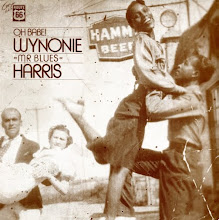
Side 2 (Wynonie Harris):
01) Bloodshot Eyes
02) Good Rockin' Tonight
03) Loving Machine
04) Shake That Thing
05) I Feel That Old Age Coming On
06) All She Wants To Do Is Rock
07) Good Morning Judge
Side 1 (Eddie Vinson):
01) Person To Person
02) I'm Weak But I'm Willing
03) Somebody Done Stole My Cherry Red
04) Queen Bee
05) Featherbed Mama
06) I Trusted You Baby
07) No Good Woman
08) Ashes On My Pillow
Side 2 (Jimmy Witherspoon):
01) The Last Mile
02) 24 Sad Hours
03) Blues In Trouble
04) Sad Life
05) Don't Tell Me How
06) Foolish Prayer
07) Highway To Happiness
08) I Done Told You
Side 1:
01) Big Mouth Gal - Eddie "Cleanhead" Vinson
02) Bring It Back - Wynonie Harris
03) If You Don't Think I'm Sinking - Eddie "Cleanhead" Vinson
04) Trouble At Midnight - Roy Brown
05) Peas And Rice - Eddie "Cleanhead" Vinson
06) Rock Mr Blues - Wynonie Harris
Side 2:
01) Lonesome Train - Eddie "Cleanhead" Vinson
02) Old Age Boogie - Roy Brown
03) Bald Headed Blues - Eddie "Cleanhead" Vinson
04) Grandma Plays The Numbers - Wynonie Harris
05) Good Bread Alley - Eddie "Cleanhead" Vinson
06) Queen Of Diamonds - Roy Brown
I've had a couple of requests for re-ups recently - one for King Records comps and another for Earl Bostic LPs.
So let's start off with some King Comps, and the "Battle Of The Blues" series. These are in fairly low bitrates (192 kbps) and were ripped from m4a files sent in by Joan many years ago. The series was revived on the blog in 2016, so here they are again, and despite the low bitrate there's still plenty of whomp in the bomp on these suckers. Blues blast ahoy!
Coming soon - Gabe's Dirty Blues, new rips of some Old King Gold collections, enough Bostic to drive any normal person insane, and whatever else Be Bop Wino can come up with.
Side 1:
01) Mighty Mighty Man
02) Boogie At Midnight
03) Cadillac Baby
04) Hard Luck Blues
05) Love Don't Love Nobody
06) Too Much Lovin' Ain't No Good
07) Big Town
08) Rock-A-Bye Baby
Side 2:
01) Answer To Big Town
02) Ain't No Rockin' No More
03) My Gal From Kokomo
04) Fannie Brown Got Married
05) Black Diamond
06) Shake 'Em Up Baby
07) Adorable One
08) Good Looking And Foxy Too
As Mr Pacino is wont to say, "Hoo Hah!" Here's another Charly comp of King (and De Luxe) sides which I bought many years ago and somehow never got round to digitising. A few years back I posted a Gusto 2LP set on Roy Brown and thought that there was no need to add this one, but on closer examination I see that this LP has some previously unissued sides (all excellent) plus some sides from Roy's late 1950s return to the King label. Besides that there's another Dave Gibson at Nozbig cover and, well, the whole thing is just a load of fun.
The usual extra info on the original issues on singles of the tracks is below plus there's a link to the Gusto 2 LP post which has been updated with new download links. We'll be rockin' through self isolation here on Be Bop Wino. Requested re-ups, more from Marv, and perhaps a few surprises coming along. Stay safe, folks.
Original Issues:
Mighty, Mighty Man / Miss Fanny Brown - De Luxe 1128 - February 1948
Boogie At Midnight / The Blues Got Me Again - De Luxe 3300 - November 1949
Hard Luck Blues / New Rebecca - De Luxe 3304 - June 1950
Love Don't Love Nobody / Dreaming Blues - De Luxe 3306 - September 1950
'Long About Sundown / Cadillac Baby - De Luxe 3308 - September 1950
Billboard 9th September 1950
Train Time Blues / Big Town - De Luxe 3318 - July 1951
Gal From Kokomo / Ain't It A Shame - King 4731 - August 1954
Black Diamond / Worried Life Blues - King 4743 - October 1954
Fanny Brown Got Married / Queen Of Diamonds - King 4761 - December 1954
Shake 'Em Up Baby / Letter To Baby - King 4816 - July 1955
Good Looking And Foxy Too / Hard Luck Blues - King 5218 - July 1959
Ain't No Rocking No More / School Bell Rock - King 5247 - September 1959
Adorable One / Ain't Got No Blues Today - King 5333 - April 1960
Too Much Lovin' Ain't No Good; Rock-A-Bye Baby; Answer To Big Town - all previously unissued
The above post includes a write up on the career of Roy Brown. It's well worth grabbing this 2LP set from Gusto which was one of the first R&B records I bought back in the late 1970s. New download links have been added!
The 4th and final volume of King's "Battle Of The Blues" series has only 12 tracks - 6 by Eddie Vinson, and 3 each by Roy Brown and Wynonie Harris. Tracks recorded 1948 - 1954 and this LP was originally released in 1959. Session details are included in the download:
Once again many thanks to Joan K for this LP which was originally posted on the 13th December 2008 here:
This is the second of four volumes of "Battle Of The Blues" that Joan K donated to the blog in 2008. Originally released in 1959, Volume 2 is a return bout between Roy Brown and Wynonie Harris, although this time the combatants opt for slow, moody blues songs rather than the all out rockin' R&B of the first volume. An interesting contrast in styles between the crying style of Roy and the hoarse voiced shouting of Wynonie. Superb musicianship on all tracks.
The remaining 2 volumes will be posted soon as will other requested re-ups (Tab Smith, early Earl Bostic, Count Hastings, and The Paragons Meet The Jesters.)
Side 1 (Roy Brown):
01. Boogie At Midnight
02. Big Town
03. Bar Room Blues
04. Love Don't Love Nobody
05. Miss Fanny Brown
06. Lolly Pop Mama
07. I've Got The Last Laugh Now
Side 2 (Wynonie Harris)
01. Bloodshot Eyes
02. Good Rockin' Tonight
03. Loving Machine
04. Shake That Thing
05. I Feel That Old Age Coming On
06. All She Wants To Do Is Rock
07. Good Morning Judge
Hang on to your hats, rockin' cats 'n' jivin' kittens, because someone has requested a re-up of the entire King "Battle Of The Blues" series. These LPs were originally issued in the late 1950s / early 1960s. They were collections of sides by Roy Brown, Wynonie Harris, Eddie "Cleanhead" Vinson and Jimmy Witherspoon which had been released as singles on King / Federal / DeLuxe from the late 1940s through to the mid 1950s.
This LP, the first in the series, was issued in 1958. "Rousing" is the word for the music contained herein as Roy and Wynonie bawl the blues over a raucous backing of pounding drums and squealing saxes.
Joan K donated all 4 volumes to Be Bop Wino back in September 2008. The original music files were in m4a format which I then converted to mp3 (192 kbps), so the sound quality isn't so hi in the fi. It's still good enough to freak out the neighbours, especially if you hook up your laptop / desktop / tablet or whatever to your sound system like I do. Let the blues blast forth!
It's time to post another
of those Gusto double LP sets which I used to pick up cheaply in a Glasgow
department store way back around 1978 or 9. And it’s also time to pay tribute
to one of the major figures of vintage R&B, Roy Brown. He was the original good
rockin’ man, being the composer of “Good Rockin’ Tonight” which he pitched unsuccessfully
to Wynonie Harris in 1947. Roy was signed by DeLuxe Records of New Jersey and
recorded the song himself, achieving a substantial R&B hit in 1948. However
a cover version by Harris outsold the original and to add insult to injury Harris
had another R&B hit with a cover of the B side of Roy’s disc, “Lolly Pop
Mama.”
Roy’s singing style was
very different from that of Harris and the other blues shouters of the time.
His vocals were much more overtly influenced by gospel, indeed Roy’s earliest
musical performances had been with a gospel group, and he was more of a blues “crier”
than a shouter. His passionate, torridly emotional delivery was a big influence
on B.B. King, Bobby Bland, Clyde McPhatter and any number of singers whose
style is retrospectively considered to be an early manifestation of soul
singing.
He was also a big influence on Elvis Presley who recorded a version of
“Good Rockin’ Tonight” for Sun Records. I’ve always found it interesting to
compare “Hard Luck Blues” with “Heartbreak Hotel.” The songs are similarly
structured and surely Elvis’ emotional delivery of a tale of woe is largely
inspired by Roy’s overwrought performance on the even more desolate “Hard
Luck Blues.”
Roy had a string of big
R&B hits between 1948 and 1951 and it should be remembered that not only
did he sing on the mix of poignant blues and wild rockers which constituted his
chart topping oeuvre, he wrote them too. He was backed by some of the best jump
bands around, including his own Mighty Mighty Men and the Tiny Bradshaw and
Griffin Brothers outfits. But from 1952 onwards there were no more hits on the
DeLuxe label which had been bought out by King Records in 1948.
It has been
said that Roy’s successful lawsuit which he took out against King over royalty
payments had something to do with the situation, but despite the dispute King
continued to record and release very strong material by Roy. It may be that
like many of his contemporaries, Roy was a victim of changing fashions within
the R&B world, with a younger generation preferring vocal groups to aging
blues singers.
His last hits were for
Imperial Records in 1957 with covers of Buddy Knox’s “Party Doll” and Fats
Domino’s “Let The Four Winds Blow.” There was a brief and fruitless return to
King and Roy’s singing career gradually faded. He continued to record and
perform intermittently throughout the 60’s and 70’s and unlike so many other performers
of post war rhythm and blues he was able to take advantage of the revival of
interest in vintage R&B which started to take hold in the late 1970s /early
1980s. Tragically he died at the young age of 55 in 1981. Had he lived longer
he would assuredly have spent many years touring the blues and rock’n’roll festivals
where he would have received the acclaim of new generations of fans.
The tracks, recording
dates and original release numbers:
1. Hard Luck Blues –
Recorded in Cincinnati, April 19th, 1950. DeLuxe 3304 (no. 1 R&B
1950)
2. Good Rockin' Man –
Recorded in Cincinnati, January 16th, 1951. DeLuxe 3319
3. Ain't It A Shame –
Recorded in New Orleans, May 27th, 1954. King 4731
4. Love Don't Love Nobody
– Recorded in Cincinnatti, June 15th, 1950. DeLuxe 3306 (no. 2
R&B 1950)
5. I've Got The Last Laugh
Now – Recorded in Cincinnati, January 16th, 1951. DeLuxe 3323
6. Trouble At Midnight –
Recorded in Miami, December 15th, 1953. King 4704
7. Boogie At Midnight -
Recorded in Dallas, September 20th, 1949. DeLuxe 3300 (no. 3 R&B
1949)
8. Travelin' Man –
Recorded in New Orleans, December 18th,
1952. King 4602
9. Ain't Got No Blues
Today – Recorded in Cincinnati, May 7th, 1959. King 5333
10. Wrong Woman Blues –
Recorded in Cincinnati, January 16th, 1951. DeLuxe 3313
11. Queen Of Diamonds –
Recorded in New Orleans, May 27th, 1954. King 4761
12. Worried Life Blues –
Recorded in New Orleans, September 2nd, 1954. King 4743
13. Ain't No Rockin' No
More – Recorded in New Orleans, May 27th, 1954. King 5247
14. Letter From Home –
Recorded in New Orleans, December 19th, 1952. King 4684
15. Beautician Blues –
Recorded in Cincinnati, June 23nd, 1950. DeLuxe 3313
16. Long About Sundown –
Recorded in Cincinnati, June 22nd, 1950. DeLuxe 3308 (no. 8 R&B
1950)
17. Bar Room Blues –
Recorded in Cincinnati, June 22nd, 1950. DeLuxe 3319 (no. 6 R&B
1951)
18. Train Time Blues –
Recorded in Cincinnati, June 22nd, 1950. DeLuxe 3318
19. Sweet Peach - Recorded
in Cincinnati, April 19th, 1950. DeLuxe 3312
20. Double Crossin' Woman
– Recorded in Cincinnati, June 23nd, 1950. DeLuxe 3311
21. Lonesome Lover –
Recorded in Cincinnati, September 27th, 1951. King 4689
22. Big Town – Recorded in
Cincinnati, January 16th, 1951. DeLuxe 3318 (no. 8 R&B 1951)
The musicians:
Roy Brown vocal on all
tracks, accompanied by -
Teddy Riley (tp) Johnny Fontenette
(ts) Edward Santineo (p) Louis Sargent (g) Tommy Shelvin (b) Frank Parker (d)
September 1949
Boogie At Midnight
The Griffin Brothers
Orchestra: Wilbur Harden (tp) Jimmy Griffin (tb) Johnny Fontenette (ts) Harry
Porter (bar) Edward "Buddy" Griffin (p) Willie Gaddy (g) Ike Isaacs
(b) Emmett "Nab" Shields (d) April 1950
Hard Luck Blues Sweet Peach
Wilbur Harden (tp) Johnny Fontenette
(ts) Leroy Rankins (bar) Edward Santineo (p) Edgar Blanchard (g) Ike Isaacs (b)
Emmett "Nab" Shields (d) June 1950
Love Don’t Love Nobody
George Jenkins replaces
Nab Shields (d), rest the same, June 1950
Train Time Blues
Bar Room Blues
‘Long About Sundown
Beautician Blues
Double Crossin’ Woman
The Tiny Bradshaw
Orchestra: Leslie Ayers (tp) Red Prysock (ts) Orrington Hall (ts,bar) James
Robinson (p) Edgar Blanchard (g) Clarence Mack (b) Calvin Shields (d) January
1951
Wrong Woman Blues
Good Rockin’ Man
I’ve Got The Last Laugh
Now
Big Town
Teddy Riley (tp) Johnny Fontenette
(ts) Alexander Nelson (bar) Charlie Nelson (p) Peter "Chuck" Badie
(b) Wilbert Smith (d) September 1951
Lonesome Lover
Teddy Riley (tp) Victor
Thomas, Sammy Parker (ts) Frank Campbell (bar) Jimmy Williams (p) Jimmy Davis
(g) Tommy Shelvin (b) Ray Miller (d) December 1952
Travelin’ Man
Letter From Home
Joe Bridgewater (tp) Sammy
Parker, Victor Thomas (ts) Jimmy C. Harris (p) Jimmy Davis (g) Clarence Jones
(b) Albert "June" Gardner (d) December 1953
Trouble At Midnight
Philip Scott (ts) James H.
Thomas (p) Edgar Blanchard (g) Tommy Shelvin (b) Frank Parker (d) May 1954
Ain’t It A Shame
Ain’t No Rockin’ No More
Queen Of Diamonds
Melvin Lastie (tp) Sammy
Parker, Johnny Fontenette (ts) Salvador Doucette (p) Jimmy Davis (g) Tommy
Shelvin (b) Placide Adams (d) September 1954
Worried Life Blues
Johnny Griffin, Ray Felder
(ts) unknown (bar) Jon Thomas (p) John Faire, Fred Jordan (g) Edwyn Conley (b)
Ron McCurdy (d) May 1959
Ain’t Got No Blues Today
Buying Roy.
His peak years are well
covered by 3 Chronological Roy Brown CDs on the Classics label:
Ace has two good CDs of
Roy’s sides. "Good Rockin' Brown" is an in-depth look at his earliest sides and is
mastered from the original acetates:
"Mighty Mighty Man!" covers his later
King material after his hit making days had passed. There’s plenty of good
stuff on it!
Sources: Bruyninckx Discography, sleevenotes to the Route 66 LPs "Good Rocking Tonight", "Laughing But Crying", "I Feel That Young Man's Rhythm." Wikipedia article on Roy Brown.
Recorded on January 13th, 1950, in Los Angeles. Personnel include Calvin Boze (trumpet and vocal), Maxwell Davis (tenor sax), and possibly Marshall Royal (alto sax), Don Wilkerson (tenor sax) and Willard McDaniel (piano).
Listen to “Safronia B” here:
Released on Aladdin 3055, b/w “Angel City Blues” in May, 1950. In Billboard, 10th June 1950, the record reached number nine in the most played juke box rhythm & blues records chart. It failed to appear in the record sales chart. By the following week “Safronia B” had dropped out of the juke box chart. This was in fact the only chart appearance by any Calvin Boze recording.
Scan courtesy Joan K
Nevertheless, it’s a fine catchy jump blues which has stood the test of time. It was included in two of the best CD compilations of Aladdin material: “The Aladdin Records Story” and “Jumpin’ Like Mad – Cool Cats & Hip Chicks.” It also appeared on the two vinyl Calvin Boze collections – “Havin’ A Ball” and “Choo Choo’s Bringing My Baby Home.”
2 CD comp presented as a mini-78 rpm album
Well worn copy of classic 2CD set compiled by Billy Vera
However, this wasn’t the first version of “Safronia B” recorded by Calvin. In 1946 he sang on “Saffronia Bee” with the Marvin Johnson Orchestra on the small G&G label. He was billed as “Calvin Boaz” on the disc. The song itself is in some ways a throwback to the swing era with phrases like “I’se a muggin’” and “Shoot the liquor to me John boy,” both of which refer to 1930’s hits. The 1950 Aladdin version is very much a Louis Jordan style jump blues with a romping backing arranged by Maxwell Davis who manages to get a sly quote from “Buttons and Bows” into his sax break.
Aladdin's big seller - Amos Milburn gets promotion in Billboard, June 1950
For decades Calvin Boze remained a somewhat mysterious figure to fans of jump blues, with the date and place of his birth being unknown and his musical career suddenly stopping in 1952. A lot more is now known about his background and you’ll be able to catch up on more about Calvin in a soon-to-appear post. Stay tuned!
So what else was happening in the R&B charts in June, 1950? “Safronia B” may have had only the most fleeting appearance amongst the platters that mattered back then, but I’ve compiled a little playlist based on the real “stayers” in the R&B charts that month.
First up is the top selling R&B record of 1950 – “Pink Champagne” by Joe Liggins on Specialty Records. Easily the top selling R&B act of the year was the Johnny Otis Revue on Savoy, thanks to his sensational female vocalist Little Esther. Three of her smashes are in the June playlist – “Double Crossing Blues,” on which she was accompanied by The Robins, and “Cupid’s Boogie” and “Mistrustin’ Blues,” both of which were duets with Mel Walker.
Scan courtesy Joan K
There was more hot jump action from Tiny Bradshaw on King with “Well Oh Well” and two classic blues tracks also sold very well at this time – Lowell Fulson (with the Lloyd Glenn band) on Swing Time with “Every Day I Have The Blues” and Roy Brown’s “Hard Luck Blues” on De Luxe which crashed straight into the charts at number six towards the end of the month. Of interest to those of us who like jazz flavoured R&B is an advert in Billboard from June 1950 in which Prestige Records attempt to market jazz sides as rhythm and blues. Among the discs billed as “America’s newest - hottest rhythm - blues records” are sides by James Moody, Stan Getz, Sonny Stitt, Gene Ammons and Wardell Gray.
Anyway whether you’re an R&B fan or a jazzer, or preferably both at the same time, here’s the playlist for June 1950. Keep checking back for more on Calvin Boze!
It’s time for another Be Bop Wino playlist post. The tracks listed below are for your listening pleasure only. Downloading is not available. As you can see from the length of the post below the playlist widget, I kind of got carried away by the exuberance of my own verbosity ….
It was a wild and raucous jump blues recorded in May 1949 by Jimmy Preston and his Prestonians. It was covered by Bill Haley and the Saddlemen in 1952, and thus became a milestone in the development of rock and roll. That’s what most fans of R&B and early rock and roll know about “Rock The Joint.” But there’s much more to the story of this record than that short summary.
Our playlist starts with three records which influenced “Rock The Joint.” They were recorded within a few days of each other at three widely separate locations. There’s also the first cover version by a white band, which preceded the Bill Haley version, and that brings us to a whole music and dance scene which was a conduit for white kids picking up on R&B but which is rarely mentioned in histories of rock and roll, at least not the ones I’ve read.
Let us go back to December 1947, a year and a half before Jimmy Preston recorded “Rock The Joint.” With the second American Federation of Musicians recording ban due to start on the first of January 1948, the final weeks of 1947 saw frantic recording activity by diskeries all across the U.S. of A. On December 18th, in Detroit, the Wild Bill Moore Sextette laid down the primitive honker “We’re Gonna Rock” for Savoy Records. Underpinned by the boogie piano of T.J. Fowler, beefy baritone sax blasts from Paul Williams, and a band chant of “We’re gonna rock, we’re gonna roll,” Wild Bill’s down in the alley tenor sax growled and squealed high, wide and handsome over the whole glorious shootin’ match.
On December 23rd, in Los Angeles, the little known Nelson Alexander Trio recorded “Rock That Voot” for Specialty Records. They were a standard piano, guitar and bass group of the kind which became popular in the wake of the success of the King Cole Trio. This driving little number is structurally close to “Rock the Joint,” although in spirit it remains closer to the jive groups of the late 1930s and early 1940s with its unison vocal chorus of “I wanna rock that voot, baby all night long!” The lyrics are racy, to say the least, as it’s pretty clear that the singer’s intense desire to “rock that voot” can mean only one thing, and it doesn’t involve listening to a Slim Gaillard record. The Trio’s members were Edgar Rice (guitar), William Regan (bass) and Nelson Alexander (piano).
Dig those ties! The Nelson Alexander Trio
The King Record label’s new signing Wynonie Harris was busy recording in December 1947. On the 13th and 16th of the month he was in a studio in New York and on 23rd December he was recording in King’s home city of Cincinnati, backed by a group of top notch musicians led by Oran “Hot Lips” Page. On the 28th December he was back in the Cincinnati studio with much the same set of musicians for a session which would yield two big R&B hits – “Lollipop Mama” and “Good Rockin’ Tonight.” It is of course the latter recording which concerns us in our eternal quest for the true origins of rock and roll.
Wynonie’s “Good Rockin’ Tonight” was a cover of the more sedate original version by the composer of the song, Roy Brown. The Harris version had a squawking sax solo by Hal Singer and a heavier beat reinforced by gospel style handclapping, a feature which would also be used by Jimmy Preston on “Rock The Joint.” The lyrics included mention of the more temporal interests of Deacon Jones and Elder Brown whose boozy misadventures had been the subject of Wynonie’s first hit “Who Threw The Whiskey In The Well,” a few years back.
Of those three “rockers” recorded in the dying days of 1947, it was “Good Rockin’ Tonight” which was released first, in February 1948. It was easily the most successful of the three records, reaching number one in the R&B chart. “Rock That Voot” was the next to be released, in April 1948, but the record buying public remained indifferent to its charms. Wild Bill Moore’s “We’re Gonna Rock” was released in June 1948 (on Savoy 666 – proof that the Devil was at work), climbing to number 14 in the R&B charts.
Billboard, June 1948
From the same edition of Billboard - Nelson Alexander not getting much of a push from his label
Still June, 1948 - Mr Blues rules race retail sales chart
Of the three discs, it is “Good Rockin’ Tonight” which remains the best known, being generally credited with starting the “rocking R&B” trend which gradually transformed jump blues into something rather different from its small group jazz origins. Of course the Elvis Presley cover version has ensured that the song is still widely known today, although how many latter day rockabilly fans are aware that Link Davis covered it on Goldband years before Elvis walked into the Sun studio?
We now find ourselves in a recording studio in Philadelphia in May 1949, where jump band leader, alto sax man, and vocalist Jimmy Preston is about to record “Rock The Joint” for Gotham Records. Preston was born in Chester, Pennsylvania, and grew up in Philadelphia. His band, the Prestonians, had started recording for Gotham in 1948.
At their second session for the label in early 1949, the band had recorded “Hucklebuck Daddy,” a fast and rowdy jump blues with shouted band vocals, moronically honking sax and a subtle chorus of “She said: ride, Jimmy, ride!” In this opus “Hucklebuck” was very plainly not a dance, but something much more intimate and energetic. By the end of April the record had reached number 6 in the Billboard Race Record chart but by early May it had already fallen back to number 13.
A follow up in the same vein was obviously called for and Gotham A&R man Doc Bagby brought along “Rock The Joint,” a song he had co-written with his band assistant Wendell Keane and his band singer Harry Crafton. He also brought along instrumental reinforcement in the shape of tenor sax player Danny Turner.
The resulting performance was even more frantic than “Hucklebuck Daddy,” but without the single entendre lyrics. “Rock the Joint” was a clarion call to have a whale of a time with its pounding beat, squealing saxophones and drunken yelling. It sounded like a small riot (not many injured) was taking place in the studio. The disc achieved the same success as "Hucklebuck Daddy,” peaking at number 6 in Billboard’s renamed Rhythm and Blues chart.
On September 22nd, 1949, Columbia Records recorded a cover version by another Philadelphia jump band, Chris Powell and the Five Blue Flames. “Combo pitches a mad ball in the “Good Rockin’ school. Gangbuster tenor, handclapping, unison chanting and a live beat add to a solid side,” noted Billboard in its issue on the 12th November, 1949. Danny Turner was on this version too, blowing alto sax with the Blue Flames, but perhaps the outstanding feature of this version is the superb playing of Eddie Lambert on electric guitar.
On September 29th, 1949, way down in Dallas, Texas, the original good rockin’ man, Roy Brown, was in the studio with his Mighty-Mighty Men recording the wildly blasting “Boogie At Midnight” which was very much in the “Rock The Joint” mould. “Well, you wanna get drunk, you got a good point, let’s get together, gonna rock this joint,” howled Roy over the unholy sax shrieks of that mightiest of the Mighty-Mighty Men, the great Johnny Fontennette. Released in November 1949 on the DeLuxe label, this apocalyptic rocker, along with “Hard Luck Blues” and “Love Don’t Love Nobody” helped Roy to become the fourth top selling R&B artist of 1950.
Good Rockin' Roy Brown
And that appeared to be that, until 1952, when a country singer called Bill Haley, who happened to live and work in Jimmy Preston’s hometown of Chester, covered “Rock The Joint” and more or less invented rock and roll, or so the story used to go. But Bill Haley and the Saddlemen weren’t the first white musicians to cover the Jimmy Preston record. The previous year a version appeared on the tiny BSD label out of Auburn, New York, performed by Jimmy Cavallo and his band.
Unlike the Bill Haley version, this was a straight rhythm and blues performance with no trace of country or pop. Jimmy Cavallo had been singing and playing R&B tenor sax since 1946, at which time Bill Haley was recording with The Downhomers, prior to recording with The Four Aces of Western Swing and (in 1950) forming The Saddlemen.
Born in Syracuse, New York, Jimmy started playing alto sax in his school band but soon shifted to tenor sax. He started listening to what were then called “race” records by Louis Jordan and other jump bands. In 1946 naval service took him to Fayetteville, North Carolina, where he not only furthered his jump blues education by hanging around black clubs, he also formed his own R&B band. Meanwhile on the Carolina coast white kids were turning on to R&B in a big way as juke box owners in the white patronised resorts started to stock their machines with jump blues 78s.
This was the kind of music that was ideal for shagging to. For the benefit of UK readers, “shag” in this context refers to a form of swing dancing which had been developing in the Carolinas since the late 1920s. I hope that clears up any unfortunate misunderstandings. Soon artists such as Paul Williams, Paul Gayten and Earl Bostic were playing the resorts. Jimmy Cavallo’s band spent the summers of ’47, ’48 and ’49 playing their brand of R&B to an ever increasing following at resorts such as Carolina Beach, Ocean Drive and Myrtle Beach.
At the end of the 1949 summer season Jimmy disbanded his group, returned to his hometown of Syracuse, recruited a new band and started playing dates at his uncle’s club where he gradually weaned the audience over to R&B. In 1950 the band took their rockin’ music to the nearby lakeside resort of Sylvan Beach where once more they built up a big following. In 1951 they recorded a session for the small BSD label of Auburn, New York. Owned by Angelo Pergolito, the recording studio was the basement of his house and the distribution was strictly local.
Scan courtey Joan K
Scan courtesy Joan K
At the recording session, the precise date of which remains uncertain, Diz Utley, the tenor sax player from Jimmy’s Carolina band was brought in to beef up the sound. Two singles were released – “Ha Ha Ha Blues” / “I Got Eyes For You” and “Rock The Joint” / “Leave Married Women Alone.” As you can hear from the playlist above, this version of “Rock The Joint” packs quite a wallop. It starts with Jimmy declaiming: “Well, rock-a-bye baby in the tree top, don’t need no wind for Mr. Blues to rock!” Of course he borrowed that from the intro to “Rock Mr. Blues” by Wynonie Harris. There’s nothing like nailing your colours to the mast right from the off. Then we’re into a suitably rockin’ rendition of the Jimmy Preston hit.
And now we enter the realms of “what if.” For instance, “what if a bigger label had picked up on the disc and given it national distribution?” Or alternatively “what if Jimmy had recorded more discs like this and that elusive bigger label had picked up on them?” Would Jimmy Cavallo have gone down in history as the founder of rock and roll instead of Bill Haley or Elvis Presley? Would rock and roll have broken big in 1952 instead of 1955?
It wasn’t to be. Jimmy didn’t record again until 1956 by which time rock and roll was already well on its way to becoming a world wide phenomenon. At least he had a few years in the sun. By this time he was fronting sax player Joe Morelli’s band, but they were billed as Jimmy Cavallo and the House Rockers. They auditioned for Alan Freed who was impressed enough to take them under his wing.
Jimmy "Cavello" in "Rock, Rock, Rock."
Twin sax threat - Jimmy with Joe Morelli in "Rock, Rock, Rock."
The association with Freed brought a recording contract with Coral, appearances in two Freed produced films – “Rock, Rock, Rock!” and “Go, Johnny, Go,” regular spots in Freed’s live rock and roll stage shows and a footnote in history as the first white rock and roll band to play the famed Apollo Theater. Unfortunately Freed got Jimmy’s surname wrong and they were now Jimmy Cavello and the House Rockers. Such is the price of stardom.
But let us roll back the years to the spring of 1952 and once more we find ourselves in the vicinity of Philadelphia: Chester, Pennsylvania, Jimmy Preston’s home town. There in the studio of radio station WPWA we find station musical director and would-be country and western star Bill Haley who leads a small band with a suitably cowboyish name – The Saddlemen. They’re recording a cover of “Rock the Joint” for release on small local label Essex.
Although steeped in country music, Bill was open to other musical influences. “Rock The Joint” was in fact the third R&B cover recorded by The Saddlemen. In 1950 they covered Ruth Brown’s “Teardrops From My Eyes” for Atlantic but it remained unissued. In the spring of 1951 they covered Jackie Brenston’s “Rocket 88” for Holiday, the predecessor of Essex. Both of these recordings were heavily countrified versions of the R&B originals. It was a common practise of the time for record labels to issue country versions of R&B songs and vice versa, and what Bill Haley and the Saddlemen were recording wasn’t particularly innovative.
Scan courtesy Joan K
Their version of “Rock the Joint” was another example of an R&B original being countrified. Billy Williamson’s steel guitar plays throughout and there’s solo space for him too. The lyrics had been bowdlerised, with booze references dropped and the Jelly Roll, the Hucklebuck and the Jitterbug being replaced by country dances like the Sugarfoot Rag, the Paul Jones and the Virginia Reel. But what this version does have is a brilliant guitar solo by Danny Cedrone which he reproduced note for note two years later on “Rock Around The Clock.”
“Rock The Joint” sold pretty well, at least well enough to convince Bill and the boys that R&B could be a fruitful direction for the band to take. Before the year was out they were no longer Bill Haley and the Saddlemen, but instead they were now Bill Haley and Haley’s Comets. Their music moved towards rhythm and blues with the addition of a drummer and later a sax player. In an upcoming post we’ll be taking a closer look at Bill’s musical transformation from country to rock and roll.
In July 1952 R&B band the Jackson Brothers Orchestra recorded five tracks for RCA Victor. Two of them were real belters– “There’s No Other Way” (Vic 20-5446) and “We’re Gonna Rock This Joint” (Vic 20-5004). The latter was reviewed in the November 1st, 1952 edition of Billboard: “One of the best sides from the label recently. It’s a joint-busting item that really rolls. Billy Henderson, showing a lot of presence, adds a screaming vocal. Should pull a lot of coin into boxes.”
“We’re Gonna Rock This Joint” although obviously influenced by Jimmy Preston’s “Rock The Joint” was a sufficiently different song to allow composer credits to be given to Wilfred Jackson. It resembles a sort of hybrid between “Good Rockin’ Tonight” and “Rock The Joint.” It was the powerhouse vocals of Billy Henderson which really lifted both “There’s No Other Way” and “We’re Gonna Rock the Joint” above the rest of the rockin’ R&B sides which were coming out at this time. Unfortunately for the Jackson Brothers Orchestra it all came to an untimely end when Billy Henderson was arrested in a show stopping onstage drugs bust. You can’t get more rock and roll than that.
And what of the rest of our rock and roll pioneers? Wild Bill Moore’s solo recording career was somewhat sporadic. His biggest hit was “Bubbles” on Savoy in 1948. He recorded good R&B sides for Regal and King in the 1950s and a couple of jazz LPs for Prestige in the early 1960s. He then went on to become a successful session musician with Motown. Of Nelson Alexander I know nothing of whence he came and whither he went. Doubtless the trio are still bashing out their jive novelties in the celestial cocktail lounge.
Wynonie Harris was a blues superstar in the early 1950s with a series of R&B hits on King. By the mid 50s it was all over, the hits dried up, the money vanished and he was all but forgotten when he died in Los Angeles in 1969. Drummer / vocalist Chris Powell continued to record for Columbia and its subsidiary Okeh until 1952. He then recorded for Philadelphia label Grand and thereafter for Groove until 1956. And then he was gone.
Bill Haley became a global superstar. His “Rock Around The Clock” is the top selling rock and roll disc of all time. But fame and money and reputation are transitory and wilder and more youthful rock and roll acts pushed him aside. Although the hits soon petered out (his last Billboard Top Twenty placing was in 1956) he remained a big name, especially in the UK. He was served poorly by many rock and roll histories but on this side of the pond anyone dissing Bill ran the risk of being stomped on by a six foot tall razor scarred former Teddy Boy. When he died in 1981 it was in the saddest of circumstances, wracked by the effects of a brain tumour and alcoholism. He deserved much better.
Jimmy Cavallo got it right. Today he enjoys a reputation as a founder of rock and roll thanks to his 1951 recordings. He enjoyed a few years in the big time in the second half of the 1950s and thereafter remained none too bothered by what might have been. He’s still rocking, having been “rediscovered” by new generations of R&B and R&R fans.
Jimmy Preston? His biggest hit was a 1950 cover on the Derby label of Louis Prima’s “Oh Babe.” In a Joe Lutcher style moment of clarity or madness, depending upon your point of view, he gave up music in 1952, having decided to go about the Lord’s work. He died in Philadelphia in 1984.
Digging deeper:
Listening Pleasures:
Wild Bill Moore: The Complete Recordings Volume 1 1945-1948 (Blue Moon BMCD 6042)
Specialty Legends of Boogie-Woogie (Ace CDCHD 422) – this Billy Vera comp has The Nelson Alexander Trio’s “Rock That Voot.”
The Black and White Roots of Rock ‘n’ Roll (Indigo IGODCD 2549) – a 2CD compilation by Dave Penny which looks at the interaction between mostly country and R&B in the years leading up to rock and roll. It includes the Jimmy Preston and Bill Haley versions of “Rock The Joint” as well as more Haley-esque originals and covers (it worked both ways) of “Rocket 88,” “Crazy Man Crazy,” and “Thirteen Women and One Man.” There's a host of other hepcats and hillbillies on board including Wynonie Harris, Hawkshaw Hawkins, Hank Williams, Ruth Brown, The Clovers, Moon Mullican, etc.
Rare Rock’N’Roll Rampage (Properbox 146) is a 4CD collection of the music that the late Charlie Gillett labelled “Northern Band Rock and Roll.” It has 3 of Jimmy Cavallo’s early 50s BSD sides as well as a selection of his Coral sides. Other featured artists include Freddie Bell & The Bellboys (including his version of “Hound Dog” which Elvis, er, borrowed), Dave Appell & The Applejacks, The Treniers, Eddie Fontaine, Boyd Bennett & The Rockets, Danny & The Juniors, Jimmy Daley & The Ding-A-Lings, etc. Sleevenotes by Adam Komorowski.
Reading Pleasures:
Jim Dawson and Steve Propes – What Was The First Rock’N’Roll Record? (Faber and Faber, 1992) is the bible of every fan of early rock and roll. It tells the stories behind 50 R&B, Jazz, Country and Pop records of the 1940s and 1950s which might be candidates for that elusive title. And the winner? Well the pleasure is in the journey rather than the arrival. There’s no Jimmy Cavallo, though.
‘Fessa John Hook – Shagging in the Carolinas. (Arcadia Publishing, 2005) A pictorial history of the music and dance scene of the Carolina beach resorts. That’s the Jimmy Cavallo band playing in the background on the front cover picture. It’s available at a very reasonable price from amazon.co.uk. John Hook has a website at http://www.beachshag.com/ which includes a link to his subscription journal “Dancing On The Edge.” In downloadable pdf format, the journal has articles based on interviews with dancers and musicians who made up what was to become known from the late 60s onwards as Beach Music. There is much to interest fans of 40s and 50s R&B and early rock and roll.
Morgan Wright’s http://www.hoyhoy.com/ website is the place to find out about the rise of rockin’ R&B. It has fascinating articles on the artists and records which were so important to the development of rock and roll. There is an article on Jimmy Cavallo based on an interview with the great man himself.
Chris Gardner’s Bill Haley Database is the ultimate point of info on the recordings of Bill Haley. Every recording he ever made, both as sideman and bandleader. An epic piece of work.
My thanks to Joan K for the scans and sound files of records by Jimmy Cavallo and Bill Haley. And finally my thanks to spyder john for educating me on the Beach Music scene and providing links to further information on this aspect of the history of rock and roll.
I solemnly swear on my copy of Arnold Shaw’s “Honkers and Shouters” and my ancient Savoy 2LP set of “Honkers and Screamers” that this is the last blog post of such a length that I will ever post. From now on, more music and less words.
Thanks to the good people who have contributed to Be Bop Wino. Many choose to remain anonymous, but I hope to namecheck pseudonymous contributors HERE.
If you own the copyright of any music posted here and wish to have it removed from the blog, please contact me at the above email address and it will be removed forthwith.
Dance On
Dedicated to REAL R&B, Rock'n'Roll, Blues and Jazz
This is a site dedicated to rockin' 1940s and 1950s music, ripped from vinyl. Some cuts are a bit on the rough side. If you're looking for audio perfection you're on the wrong site baby! If you like what you hear on this site please buy this kind of music. There are many reasonably priced reissues available from web dealers or perhaps from your local record shop, if it still exists. These reissues will be in far better sound quality than the vinyl rips on this site and they will usually have more up to date liner notes and info, so go out and splash a little cash now and again. Help keep those reissue labels going in these difficult times.
No in-print CDs will be posted here. In fact no CDs will be posted here. I will occasionally list recommended purchases to help you hear more from artists featured on the blog.
The great rescue mission to restore streaming audio to El Enmascarado's 78 rpm rips continues. Remember - both sides of these big ten inchers are being re-uploaded to the posts. Today's updates:
Non functioning Divshare embedded players now being replaced with Box links to mp3 players. There's a lot of posts to work through thanks to the collapse of Divshare. Be patient groovers and movers!
Wilder Side
-
*VA - PALEMOON'S COUNTRY MUSIC SERIES VOL. 53*
01 - Debbie Brimer - Don't Let The Stars Get In Your Eyes
02 - Jerry Brock - Your Memory ...
St. Clair Pinckney born September 17, 1930
-
St. Clair Pinckney Jr. (September 17, 1930 – February 1, 1999), often
nickname "Pink," was an American tenor and baritone saxophonist and
flautist, be...
Birkenhead to Barrow or The Moving Theatre
-
If you saw the recent documentary about Freddie Davies on Talking Pictures
TV you will have caught a glimpse of his grandfather, the comedian Jack
Herbe...
KOREAN WAR BLUES
-
*KOREAN WAR BLUES*
La guerre de Corée qui a duré trois ans et fait – au moins! – entre 2,5 et
3 millions de morts et qui a abouti à une p...
Spring Break
-
Dear you all, Blue Dragon is taking a long overdue spring break.😁 You can
keep commenting and registering, but please don't expect any answer within
a few...
En partant
-
In the summer of 1979 I was visiting friends in Quebec City and one day was
out walking around Basse-Ville and kept seeing these billboards for Nana
Mousko...
-
37. Shirley Matthews & The Big Town Girls ● Big Town Boy ● 1964
Shirley Matthews was a telephone operator for Bell Canada in Toronto during
the day...
The Hound Is Back On The Air...
-
After a short 20 year breather, I'm back on the radio, well, sort of radio,
I broadcast live every Thursday from 6-8 PM Eastern Standard Time (NYC
time)...
We Believe In Happy Endings
-
And so...an ending and a beginning. Thanks to all the folks who have
stopped by, commented, been loyal, or just came for the Xmas tunes or the Top
100 ...
NOBODY'S BABY
-
NOBODY’S BABY (Miriam) Norton 397 So here we are in this new fangled world,
but still, the beat goes on, as it has since boy first met girl and hearts
ran ...
THEE BLOODY END !!!
-
*ALL GOOD THINGS COME TO AN END.*
Yes my dear friends/readers, I've decided to end this very blog !
No particular reason to be frank, I've just decided t...
Jeff Chandler: My Second Cousin Removed
-
by Dave the Spazz
“Don’t ever let them operate on your back. That’s how we lost Jeff
Chandler.”
--Don Van Vliet 1
Today’s Hanukkah’s Jew answers to the ...
Doo Wop Jive Special
-
Saludos, de nuevo, rockeros del ciberespacio.
Para la entrada de hoy me gustaria celebrar la entrada del verano, ese
tiempo tan maravilloso, donde ocurren ...







.jpg)


%2045%20-%207001B.png)