Side 1:
01. I'm A Fool To Care
02. Highway 61 Blues
03. Gambling Woman
04. Don't You Know I Love You Baby
05. Teasin' Brown
06. Hey Mr. Gatemouth
07. You're My Specialty Baby
08. Gotta Walk
Side 2:
01. Something I'm Gonna Be
02. I Ain't Mad At You Pretty Baby
03. Did You Ever Try To Cry
04. Satisfying Papa
05. Graveyard Disposition
06. Willa Mae
07. After Loving A Woman
08. You're Having Hard Luck
Gatemouth Moore Sings Blues (Zippy)


The Tracks - The Lowdown
 The Chitlin' Circuit and the Road to Rock 'N' Roll - Preston Lauterbach. History of the network of clubs and theaters worked by Black music acts from the 1930s onwards. Contains a full account of the Natchez Rhythm Club fire.
On YouTube - The Rhythm Club Fire Documentary (complete film). 30 minute award winning film on the Natchez Rhythm Club fire.
Sources:
notes by Neil Slaven to Westside CD "Hey Mr. Gatemouth: Complete King Recordings."
"The Chitlin' Circuit And The Road To Rock 'N' Roll" - Preston Lauterbach.
"Big Band Jazz" by Albert McCarthy.
Bruyninckx discography.
Billboard magazine.
I've "reconstructed" this LP which was originally issued in June 1960 by trawling the internet for the artwork and matching it up with tracks in my collection. As I did this a few weeks ago I've managed to forget where exactly I found the artwork! Probably discogs.com or a record sales site, so my thanks to whoever uploaded the cover and label shots.
Arnold Dwight "Gatemouth" Moore was one of the best of the 1940s blues shouters, yet his recordings for two of the larger independent record companies, National and King, failed to sell. He was a performer who could not only shout rambunctious blues but was also capable of handling crooning duties on pop standards and ballads.
Born in Topeka, Kansas, in 1913, his music career took off in 1930 in Kansas City where he sang in a club which featured musicians such as Benny Moten and Count Basie. He formed a quartet in Topeka called the Four Sharps who were recruited for a tour of Tennessee, Mississippi, Louisiana, and Texas by the Beckman and Garrity Carnival, a booking which was the start of years on the road for Gatemouth and the Four Sharps with tent shows, circuses, minstrel shows and reviews - outfits such as Porkchop Chapman's Show, Sammy Green's Down In Dixie Minstrels, Sam Dale's Circus, Ida Cox's Darktown Scandals and the F.S. Wallcot Rabbit Foot Minstrels. After being left stranded in Clarksdale Mississippi by the Walcott show, Gatemouth split from the Four Sharps and settled in Memphis.
Born in Topeka, Kansas, in 1913, his music career took off in 1930 in Kansas City where he sang in a club which featured musicians such as Benny Moten and Count Basie. He formed a quartet in Topeka called the Four Sharps who were recruited for a tour of Tennessee, Mississippi, Louisiana, and Texas by the Beckman and Garrity Carnival, a booking which was the start of years on the road for Gatemouth and the Four Sharps with tent shows, circuses, minstrel shows and reviews - outfits such as Porkchop Chapman's Show, Sammy Green's Down In Dixie Minstrels, Sam Dale's Circus, Ida Cox's Darktown Scandals and the F.S. Wallcot Rabbit Foot Minstrels. After being left stranded in Clarksdale Mississippi by the Walcott show, Gatemouth split from the Four Sharps and settled in Memphis.
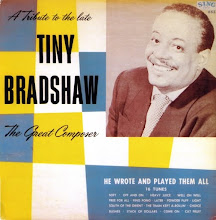
In 1939 he was recruited by the Walter Barnes band for an extensive tour which lasted into 1940. In April 1940, the tour was about to finish and the band were due to head back to their home base in Chicago when they accepted an extra booking by the Rhythm Club in Natchez, Mississippi. The Rhythm Club consisted of a rather ramshackle club / dance hall housed in a timber and tin sheeting building which had served as a pentecostal church and then as a blacksmith's or motor repair shop. The owners had booked the Tiny Bradshaw band for a dance timed to coincide with the local black high school's commencement celebration on April 23rd, 1940. Bradshaw, however, was offered a week's residency at the Apollo Theatre in Harlem and withdrew from the arrangement.
The Walter Barnes band was a long established and popular outfit on what was to become known as the Chitlin' Circuit - that network of clubs, dance halls and ghetto theatres (and even tobacco warehouses) which constituted the venues on the touring itinary of black musicians. The Barnes outfit accepted the late booking, the dance was saved, and the musicians could return home the following day.
What happened on that evening in Natchez has entered history as one of the worst night club fire disasters in the U.S. The Rhythm Club was a potential death trap as the owners had decorated the hall with dried Spanish moss soaked in a kerosene based insect repellent and then sealed all exits and boarded up the windows to prevent non paying spectators from seeing or hearing the band. The only door left open was the main entrance and that was a door which opened inwards.
When fire broke out it spread rapidly and mass panic ensued as the dancers attempted to flee through the only available exit. The death toll came to 209 with many others injured. Deaths were due to crushing, suffocation (the fire consumed all available oxygen), scalding (the heated tin sheeting turned water from the fire brigade's hoses to steam) and burning. Firemen who attempted to enter the building by the front door were confronted by a wall of bodies and had to rip down the sheeting from the walls to gain entry and to let survivors escape.

Walter Barnes, who had kept the band playing in a heroic attempt to quell the panic, died along with all of his musicians except the bass player and drummer who managed to smash their way through a boarded up window and thus escape from the doomed building. A third surviving band member was Gatemouth Moore who was outside the building in the band bus when the fire broke out. One contemporary report stated that he had already left the tour in the company of several other musicians a few days before the disaster but his inclusion in this group appears to have been mistaken.

Gatemouth returned to Memphis for a spell, singing with the Andrew Jenkins band. In 1941 he moved back to Kansas City to take up a residency at the Chez Paree club where he was backed by the Carolina Cotton Pickers with whom he toured in 1942. The club owner, a Mrs Gilmore, decided to start her own record label, Gilmore's Chez Paree, for which Gatemouth made his recording debut in 1944 or early 1945. He cut two singles backed by an "all star" lineup of KC musicians which included Tommy Douglas and Walter Page.


The first single released had two of Gatemouth's own compositions, "I Ain't Mad At You" and "Did You Ever Love a Woman" which he went on to re-record for National when he signed with that company in May of 1945. Unfortunately despite some good records backed by top class bands Dallas Bartley And His Small Town Boys, the Budd Johnson Orchestra, and the Tiny Grimes Swingtet (including John Hardee on tenor sax), the records failed to sell and Gatemouth's contract was not renewed after his third session for National in October 1946.
His first session for King was in August 1947 with a piano, guitar and drums trio. For his second session in October 1947, the group was augmented with a horn section. A total of eight sides were recorded at these sessions, all of which were released on singles and six of which made it to this LP. See section below for details.
On the 26th December 1947 Gatemouth was in a Chicago studio where he recorded a mammoth 20 tracks as King were stockpiling sides in anticipation of the American Federation of Musicians recording ban due to come into force on the 1st January 1948. Of the twenty sides, ten are included on this LP, only four of which had a previous single release. The remaining masters remained unreleased until the the issue of the Westside CD "Hey Mr. Gatemouth" in 2000. There was, however, one exception - a re-recording of "Did You Ever Love a Woman" the master of which had disappeared.

Gatemouth before he renounced sin
Despite the generally very good standard of Gatemouth's King recordings his experience with National was repeated - disappointingly low sales and the termination of his contract. He kept performing live though, until one night in 1949 at the Club DeLisa in Chicago he underwent a sudden religious conversion on stage. His voice simply vanished and he was unable to utter a sound despite the Red Saunders band repeatedly cuing him in. Then he launched into "Shine On Me" amidst tumultous scenes in that palace of sin. On Sunday he was in church, on Monday he enrolled in Bible college and he was on the way to becoming the Reverend Gatemouth Moore, saviour of souls.
That was the end of the Reverend's R&B career, with one exception. After decades of preaching, recording religious songs and playing gospel records on Memphis station WDIA, in 1977 he arranged with Johnny Otis to record an album of R&B tracks which included his old songs and a new song in which he looked back to the now vanished days of his life as a blues singer, "Beale Street Ain't Beale Street No More." He can be seen singing this song in the film "The Road To Memphis", an episode in the TV series "Martin Scorsese Presents The Blues" from 2003. He appears alone, apparently singing to himself as he walks down a deserted and much changed Beale Street. The Reverend Gatemouth Moore went to his reward in 2004.
The Tracks - The Lowdown
I'm A Fool To Care; Highway 61 Blues - recorded in Cincinnati, 12th August, 1947. Personnel - Gatemouth Moore (vocals); Allen Smith (piano); Willie Gaddy (guitar); Monty Morrison (drums). Also recorded at this session but not on this LP - Christmas Blues; East Of The Sun.
I'm A Fool To Care / Highway 61 Blues - released on King 4178 in October 1947.
Don't You Know I Love You Baby; Gamblin' Woman; Satisfying Papa; Teasin' Brown - recorded in Cincinnati, September 1947. Personnel as above but add unknown trumpet, alto sax, tenor sax.
Gamblin' Woman / Satisfying Papa - released on King 4187 in December 1947.
Teasin' Brown / Christmas Blues - released on King 4195 in December 1947.
Hey Mr. Gatemouth; Did You Ever Try To Cry; Something I'm Gonna Be; You're Having Hard Luck Blues; Willa Mae; Graveyard Disposition; You're My Specialty Baby; After Loving A Woman; Gotta Walk; I Ain't Mad At You Pretty Baby - recorded in Chicago, 26th December, 1947. Personnel: Gatemouth Moore (vocals); Bill Martin (trumpet); Bert Patrick (alto sax); Moses Gant (tenor sax); Nat Walker and Simeon Hatch (piano); Adolphus Dean (bass); James Adams (drums).
Hey, Mr. Gatemouth / Don't You Know I Love You Baby - released on King 4211 in April 1948.
East Of The Sun / Gotta Walk released on King 4224 in May 1948.
Something I'm Gonna Be / You're My Specialty Baby released on King 4256 in December 1948.
Did You Ever Try To Cry; You're Having Hard Luck Blues; Willa Mae; Graveyard Disposition; After Loving A Woman; I Ain't Mad At You Pretty Baby - all first released on King LP 684 "Gatemouth Moore Sings Blues" in June 1960.
A further ten tracks were recorded at the 26th December 1947 session. Nine were first issued on Westside CD WESF 100, "Hey Mr. Gatemouth. Complete King Recordings" in 2000. One master, "Did You Ever Love a Woman," remains lost.
Recommended:
 Savoy Jazz CD SVY 17327 collection of complete National recordings. 20 tracks.
 Westside CD WESF 100 the complete King recordings. 27 tracks. Detailed article by Neil Slaven on Gatemouth which is the main source of information for this post.
I'm A Fool To Care / Highway 61 Blues - released on King 4178 in October 1947.
Don't You Know I Love You Baby; Gamblin' Woman; Satisfying Papa; Teasin' Brown - recorded in Cincinnati, September 1947. Personnel as above but add unknown trumpet, alto sax, tenor sax.
Gamblin' Woman / Satisfying Papa - released on King 4187 in December 1947.
Teasin' Brown / Christmas Blues - released on King 4195 in December 1947.
Hey Mr. Gatemouth; Did You Ever Try To Cry; Something I'm Gonna Be; You're Having Hard Luck Blues; Willa Mae; Graveyard Disposition; You're My Specialty Baby; After Loving A Woman; Gotta Walk; I Ain't Mad At You Pretty Baby - recorded in Chicago, 26th December, 1947. Personnel: Gatemouth Moore (vocals); Bill Martin (trumpet); Bert Patrick (alto sax); Moses Gant (tenor sax); Nat Walker and Simeon Hatch (piano); Adolphus Dean (bass); James Adams (drums).
Hey, Mr. Gatemouth / Don't You Know I Love You Baby - released on King 4211 in April 1948.
East Of The Sun / Gotta Walk released on King 4224 in May 1948.
Something I'm Gonna Be / You're My Specialty Baby released on King 4256 in December 1948.
Did You Ever Try To Cry; You're Having Hard Luck Blues; Willa Mae; Graveyard Disposition; After Loving A Woman; I Ain't Mad At You Pretty Baby - all first released on King LP 684 "Gatemouth Moore Sings Blues" in June 1960.
A further ten tracks were recorded at the 26th December 1947 session. Nine were first issued on Westside CD WESF 100, "Hey Mr. Gatemouth. Complete King Recordings" in 2000. One master, "Did You Ever Love a Woman," remains lost.
Recommended:


On YouTube - The Rhythm Club Fire Documentary (complete film). 30 minute award winning film on the Natchez Rhythm Club fire.
Sources:
notes by Neil Slaven to Westside CD "Hey Mr. Gatemouth: Complete King Recordings."
"The Chitlin' Circuit And The Road To Rock 'N' Roll" - Preston Lauterbach.
"Big Band Jazz" by Albert McCarthy.
Bruyninckx discography.
Billboard magazine.






.jpg)

%2045%20-%2061179B.png)

.jpg)